Summary:
- The Bangkok MRT subway is one of the most reliable public transportation systems in the city. For tourists, it’s safe, modern, and connects directly to top attractions like Chatuchak Market, Chinatown, and the Grand Palace area.
- MRT fares are affordable, starting at 17 THB per trip, and tourists can pay easily using single journey tokens or contactless credit/debit cards (Visa, Mastercard, UnionPay). This makes it a simple and convenient choice for short-term visitors.
- The MRT connects seamlessly with the BTS Skytrain, Airport Rail Link, and SRT Red Line, allowing travelers to move across Bangkok and reach both airports without worrying about traffic delays.
What is the Bangkok MRT Subway?
The Bangkok MRT (Metropolitan Rapid Transit) is the city’s underground train system and one of the most efficient ways for tourists to explore. Unlike the BTS Skytrain, which runs above ground, the MRT takes you directly to cultural and historic neighborhoods like Chinatown, Chatuchak Market, and Sanam Chai near the Grand Palace.
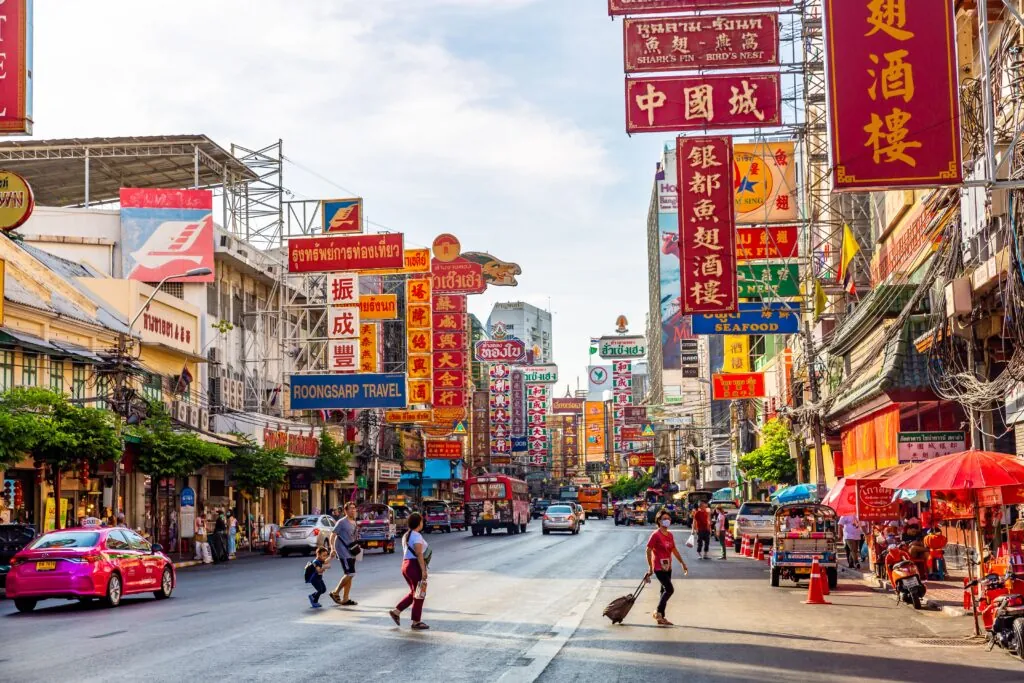
The MRT is modern, safe, and tourist-friendly with English maps, signs, and announcements. Tickets are cheap, trains are air-conditioned, and service runs daily from early morning until midnight. For first-time visitors, it’s a stress-free way to experience Bangkok.
Why Tourists Should Use the MRT
- Fast and efficient: Skip Bangkok’s traffic and reach key spots like Chatuchak Market or Chinatown in minutes.
- Budget-friendly: Tickets start from 17 THB.
- Safe and clean: Stations and trains are modern, air-conditioned, and monitored with CCTV.
- Tourist-friendly: English ticket machines, clear maps, and staff assistance at every station.
- Well-connected: Links with BTS Skytrain, Airport Rail Link, and major bus terminals.
- Unique access: Only the MRT takes you directly to Sanam Chai Station near Bangkok’s historic temples and museums.
Bangkok MRT Map & Routes
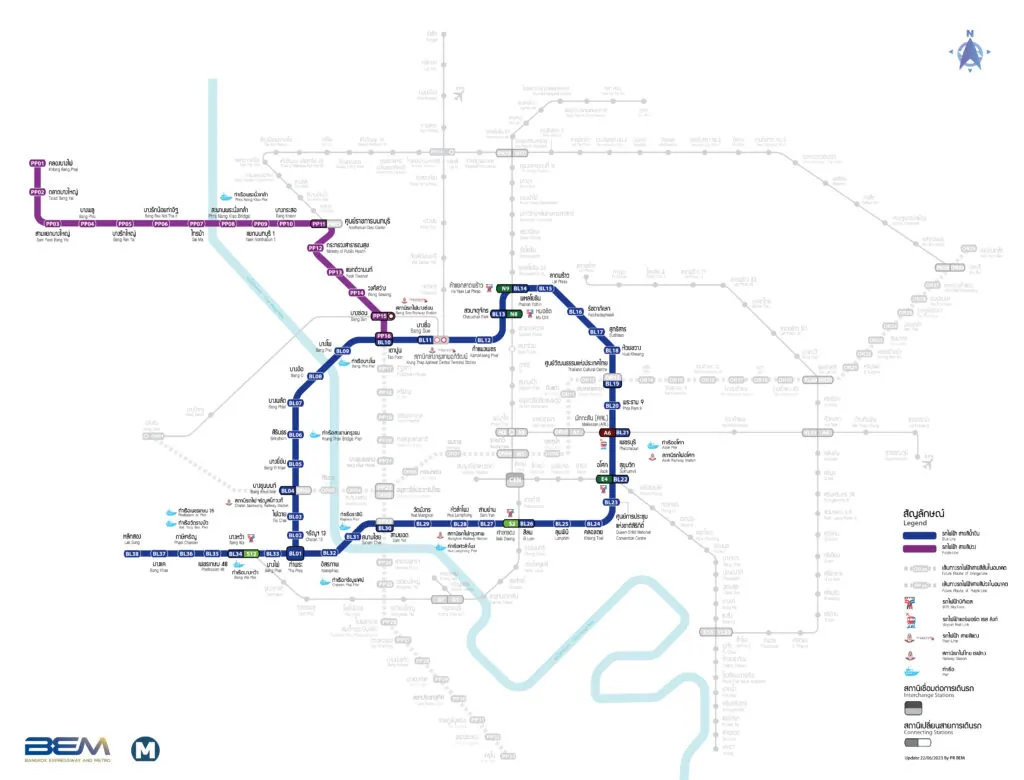
The MRT Bangkok map covers two main lines that connect popular districts and tourist attractions:
- Blue Line: Runs in a loop around central Bangkok. Top stops include:
- Chatuchak Park Station – for Chatuchak Weekend Market
- Sukhumvit Station – direct link to BTS Asok and Terminal 21 Mall
- Wat Mangkon Station – gateway to Chinatown food and culture
- Sanam Chai Station – near the Grand Palace and Wat Pho
- Hua Lamphong Station – Bangkok’s historic railway terminal
- Purple Line: Extends to northern Bangkok, connecting to Bang Yai and government districts. It’s less touristy but useful for longer stays.
Tip: Download a Bangkok MRT map before traveling.
How to Get to the Airport Using MRT
The MRT doesn’t go directly to the airports, but it connects with other train lines:
- Suvarnabhumi Airport (BKK) – Take the MRT Blue Line to Phetchaburi Station, then transfer to the Airport Rail Link at Makkasan Station.
- Don Mueang Airport (DMK) – Take the MRT Blue Line to Bang Sue Grand Station, then transfer to the SRT Red Line commuter train directly to the airport.
How to Buy MRT Tickets, Fares & Prices
Using the Bangkok MRT Subway is straightforward and tourist-friendly. Every station has bilingual ticket machines and staff at counters who can assist. Unlike the BTS, the MRT does not have a one-day tourist pass, but travelers can choose between single tokens or cashless contactless payments.
- Single Journey Token: Buy one at a ticket machine or station counter by selecting your destination. Pay with coins or banknotes (machines provide change). You’ll receive a round black plastic token, which you tap at the entry gate and insert at the exit gate. Fares range from 17 – 45 THB, depending on the distance traveled.
- Creditcards Payment: Tourists can use their international Europay, Mastercard, or Visa credit/debit cards directly at the gates. Simply tap your card at entry and exit, and the fare will be charged automatically. This is the easiest option for visitors who prefer not to carry coins.
- MRT Stored Value Card: Locals often use a rechargeable MRT card, which requires a deposit and is less practical for short stays. While it’s available at ticket counters, most tourists prefer single journey tokens or contactless payment cards instead.
MRT Operating Hours
MRT Operating Hours: Daily from 6:00 AM – midnight, with trains every 3–6 minutes during rush hours and every 7–10 minutes during off-peak times.
Tip: For short trips, tokens are fine. But if you already have a contactless bank card, using EMV is the fastest and most convenient way to ride the MRT.
MRT vs BTS in Bangkok
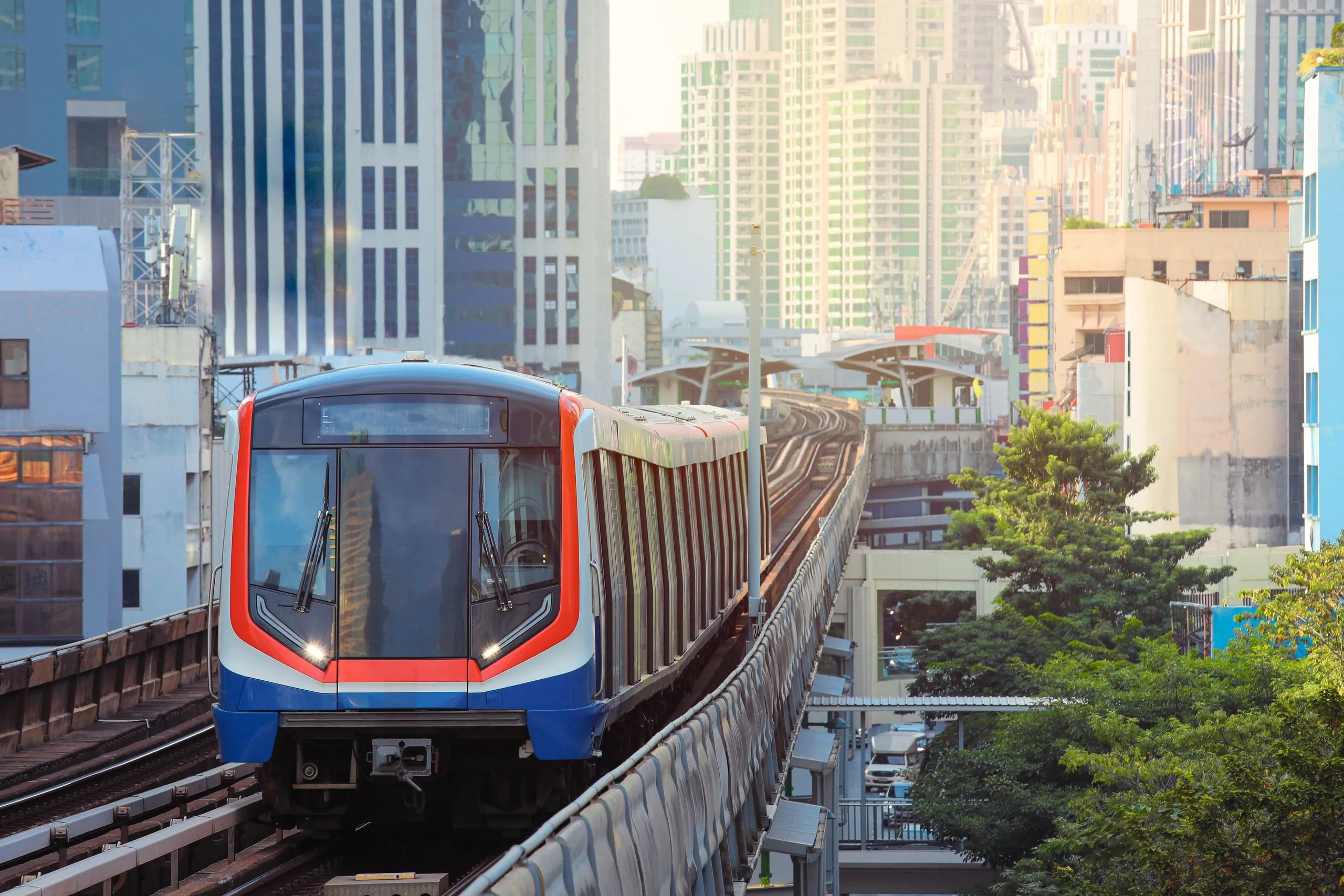
The most effective way to explore Bangkok is to combine the MRT subway and BTS Skytrain, since together they cover nearly the whole city. The BTS runs above ground and is ideal for reaching shopping malls, nightlife, and business districts, while the MRT goes underground to cultural areas like Chinatown, Chatuchak Market, and Sanam Chai near the Grand Palace. Both systems are clean, safe, and easy to use, with English signs and frequent trains. Tourists can switch between the two at major interchange stations such as Sukhumvit–Asok, Chatuchak Park–Mo Chit, and Silom–Sala Daeng, making it simple to travel across Bangkok without worrying about traffic. For the best experience, use tokens or EMV cards on MRT and consider the Rabbit Card or One-Day Pass on BTS to save time.
FAQs about Bangkok MRT
Not directly. For Suvarnabhumi Airport, transfer at Phetchaburi–Makkasan. For Don Mueang Airport, transfer at Bang Sue–Krungthep Apiwat (Grand Bangsue Station) Red Line.
Yes. The MRT is clean, air-conditioned, and monitored with CCTV. It’s one of the safest ways to travel in Bangkok.
Use a bilingual ticket machine. Choose your destination, insert coins or notes, and receive a token. Day passes are available at station counters.
- Chatuchak Park – Weekend Market
- Wat Mangkon – Chinatown
- Sanam Chai – Grand Palace and Wat Pho
- Sukhumvit – Shopping and nightlife
No — Eating and drinking are not allowed inside MRT trains or stations. Sealed drinks are fine, but staff may ask you to finish open drinks before entry.
The BTS is above ground and connects many malls, while the MRT is underground and connects cultural spots. Together, they make Bangkok travel seamless.
Yes — The Bangkok MRT is considered very safe for tourists, including solo travelers and women at night. Stations are well-lit, monitored by CCTV, and patrolled by security staff. Trains are modern, air-conditioned, and usually busy enough that you won’t feel isolated, even in the evening.
No — the MRT does not currently offer a one-day unlimited travel pass for tourists. Instead, visitors can buy single journey tokens or simply use contactless bank cards for easy pay-as-you-go access. Unlimited rides are only available on the BTS Skytrain.
The MRT is luggage-friendly and accessible. Elevators and escalators are available at most stations, making it convenient for travelers with bags, wheelchairs, or strollers. Toilets are available inside many stations, and stations are designed with accessibility in mind. Large suitcases are generally fine, but avoid peak rush hours if you’re carrying bulky bags.
Yes — the MRT operates every day of the year, including public holidays. The schedule generally remains the same, with trains running from 6:00 AM to midnight. During holiday events (like New Year’s Eve), the MRT sometimes extends operating hours, but those announcements are posted at stations and on official MRT channels.