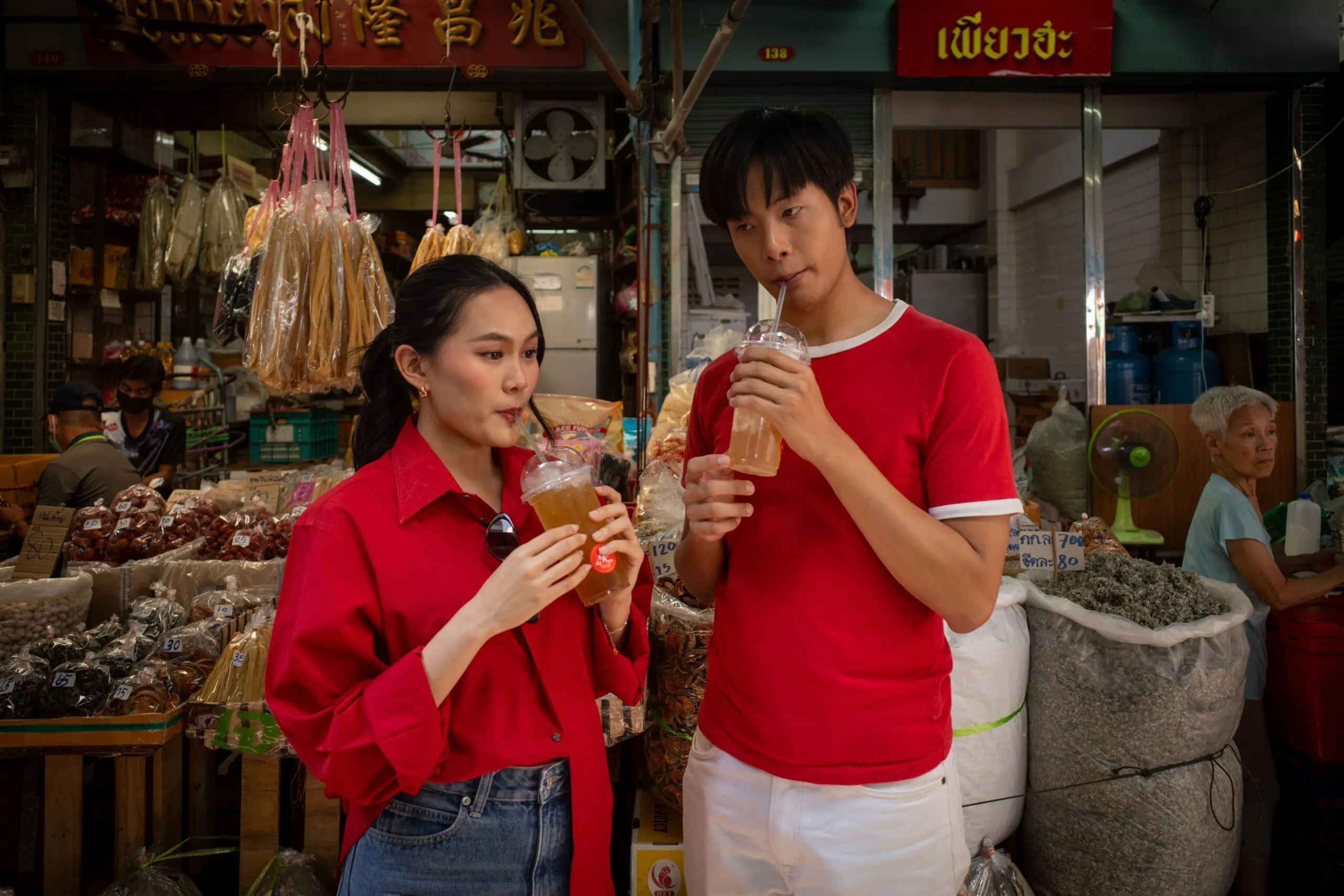
Summary:
- A Masterclass in Thai-Chinese Heritage: Explore Yaowarat’s legendary food scene, where centuries-old traditions like Teochew-style braised goose and Hainanese-style suki offer a sophisticated taste of the diaspora’s culinary soul.
- Must-Try Rare Delicacies for Explorers: From the “bouncing” artisanal fish balls of Leng Buay Ia Market to the elusive sticky rice sausage, Chinatown serves as a living museum for unique textures and flavors that define the global standard for street food.
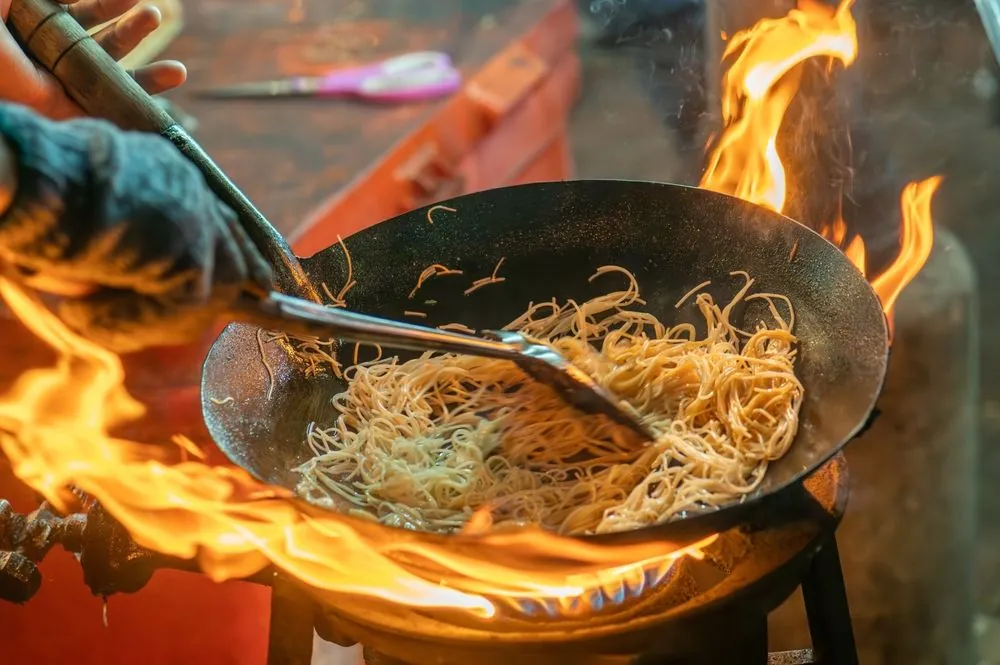
To dine in Yaowarat is to engage in a multi-sensory dialogue between ancient heritage and modern vitality. Here, the clatter of heavy cleavers and the rhythmic hiss of high-pressure woks create a symphony that has played for generations.
The following ten establishments represent the absolute pinnacle of this culinary landscape, monuments to the Thai-Chinese diaspora where food is treated with the reverence of fine art.
1. Texas Suki
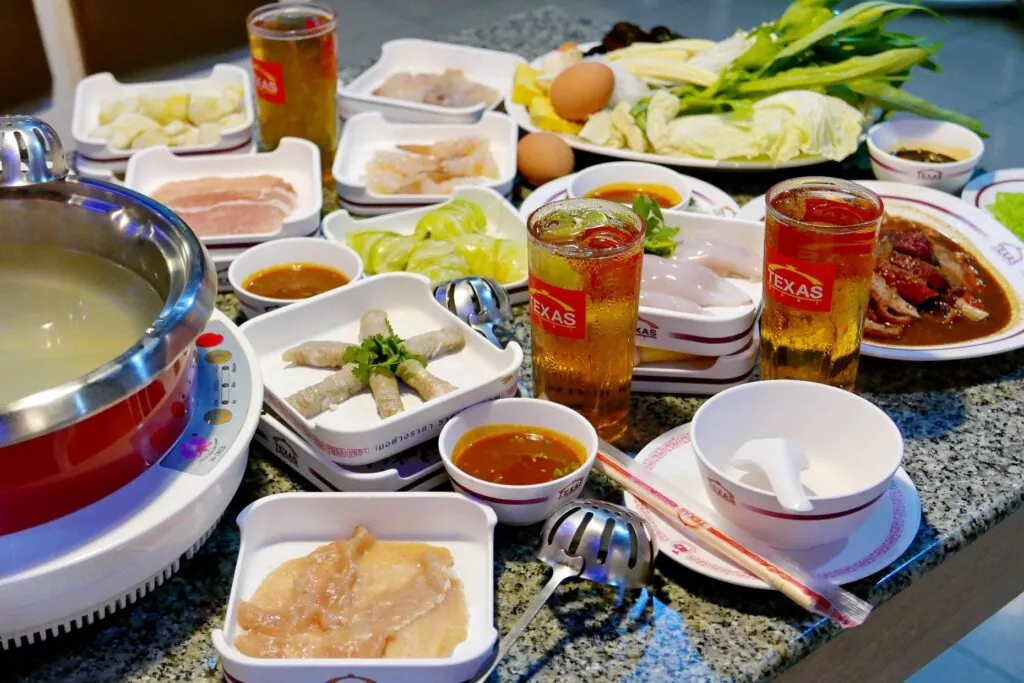
Cantonese-style hot pot
Founded in 1979 and named after the historic Texas Theater that once anchored this alleyway, this establishment is a time capsule of post-war Chinese-Thai dining. It offers a refined, communal hotpot experience where the broth is a delicate canvas for premium ingredients. Their roasted duck is a masterpiece of technical execution, featuring honeyed, lacquer-crisp skin that yields to succulent meat. The signature dipping sauce remains a closely guarded family secret, offering a nuanced heat that contemporary chains simply cannot replicate.
2. Lod Chong Singapore
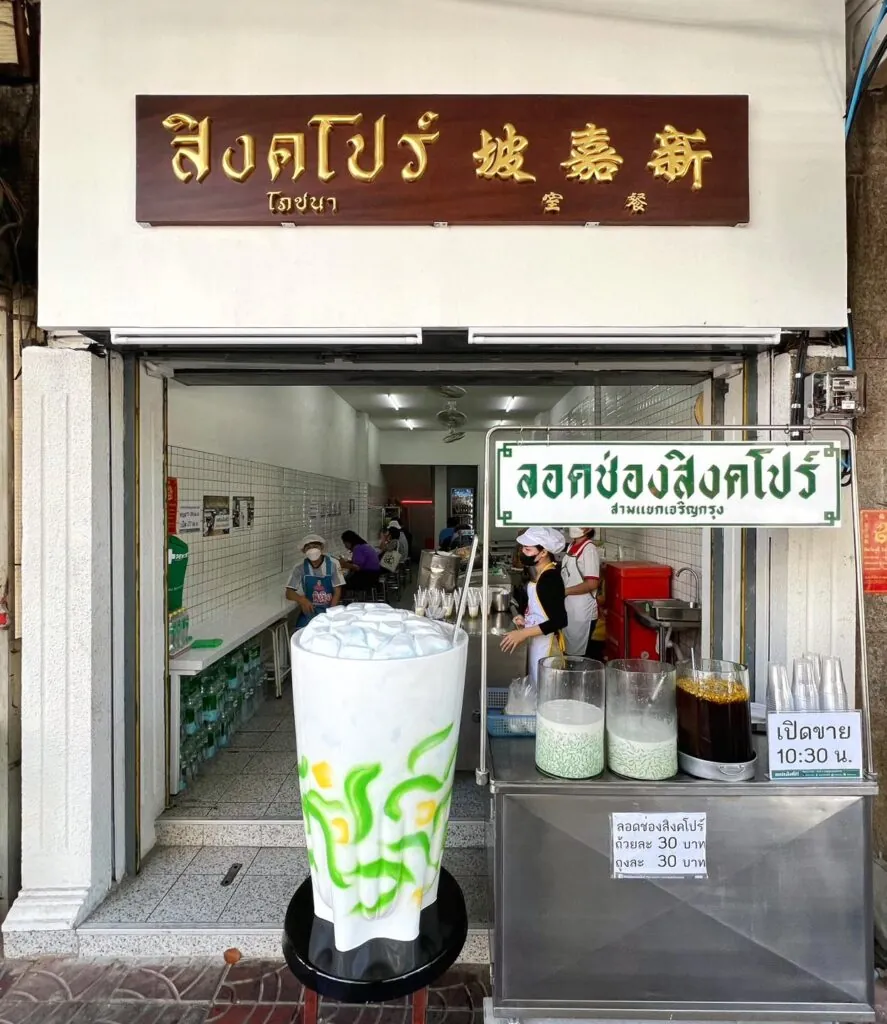
Famous ice dessert in Yaowarat.
This is not merely a refreshment stall; it is a legendary footnote in Bangkok’s history. For over 80 years, it has stood near the site of the old Singapore Cinema, hence the name. They revolutionized the classic Lod Chong by substituting traditional rice flour with tapioca, creating a jewel-like, translucent noodle with a distinct, springy al dente texture. Served in chilled, hand-pressed coconut milk infused with toasted palm sugar, it remains the definitive antidote to the tropical humidity of Chinatown
3. The Bangkok Heritage
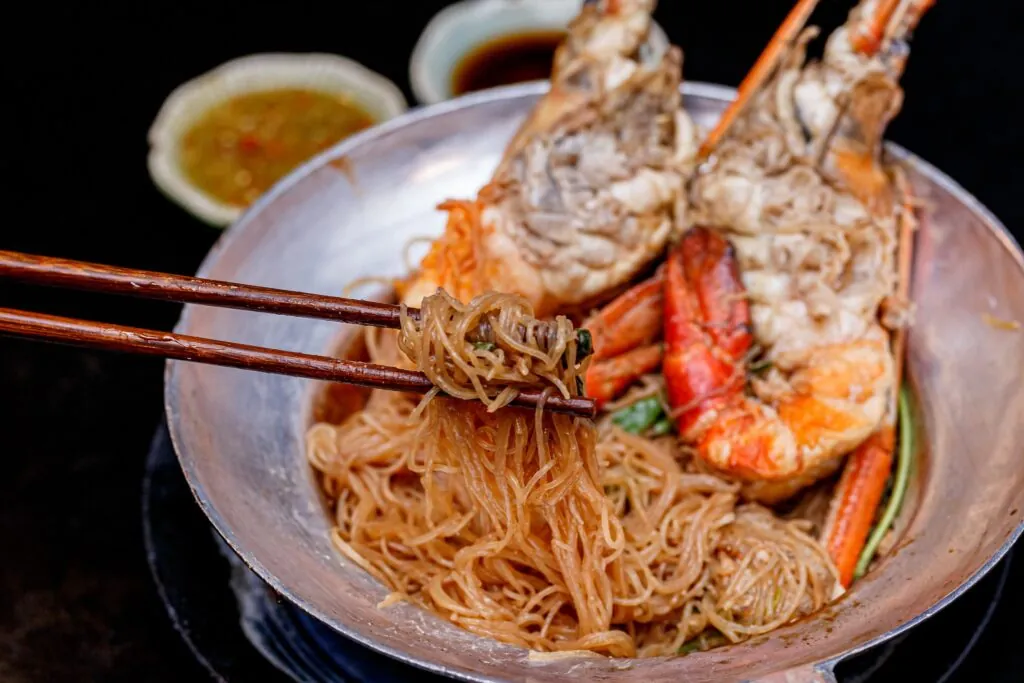
A famous Cantonese and dim sum restaurant.
Positioned as a bastion of Cantonese culinary tradition, The Canton House offers an elegant reprieve from the frantic street-side energy. This restaurant is a study in the art of Dim Sum, where the kitchen focuses on the integrity of the fold and the freshness of the filling. Their Har Gow (crystal shrimp dumplings) are particularly noteworthy, featuring translucent skins that are steamed to the precise second of perfection, encasing plump, oceanic prawns that snap with every bite.
4. Lai Heng Phochana
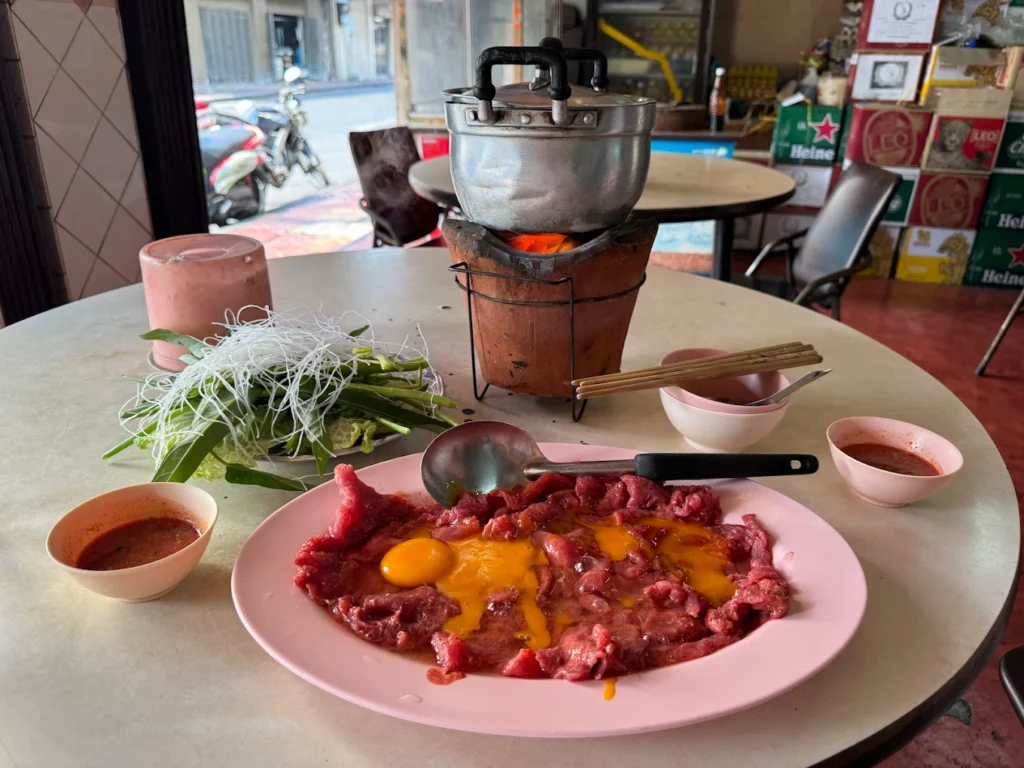
Old-style Teochew hot pot restaurant
A sanctuary for the culinary purist, Lai Heng Phochana specializes in Hainanese-style suki, a preparation defined by its deep, fermented complexity. The hallmark of the house is its use of fermented red bean curd, which lends the broth a savory, sunset hue and an intense umami backbone. It is a rustic yet sophisticated style of cooking where marinated meats are velveted with raw egg before being simmered, resulting in a texture that is remarkably tender and refined.
5. Tia Sua Restaurant
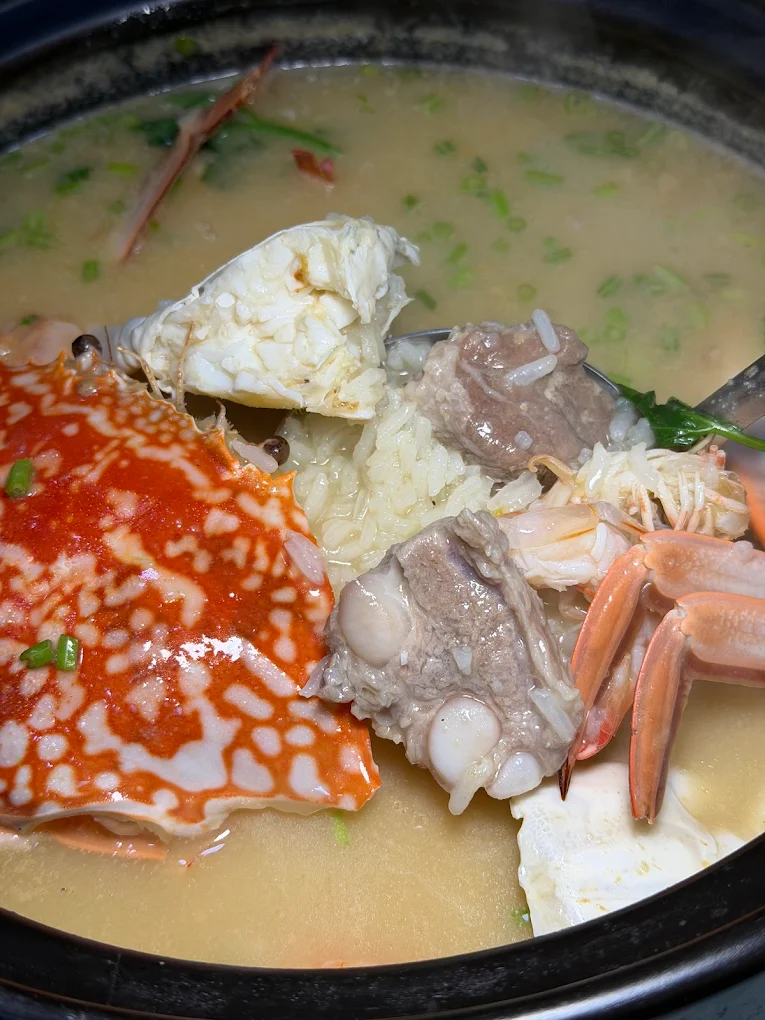
Teochew restaurants on Song Wat Road.
Located on the storied Song Wat Road, Tia Sua is a venerable institution of Teochew cuisine. This is a destination for “proper” dining, where the menu celebrates the bounty of the Gulf of Thailand. Their Teochew Braised Goose is a flagship dish, slowly simmered in a master stock of soy and aromatic spices until the meat is permeated with flavor. The restaurant’s atmosphere, simple, dignified, and bustling with local regulars, reflects a commitment to culinary substance over superficial flair.
6. Thai Heng
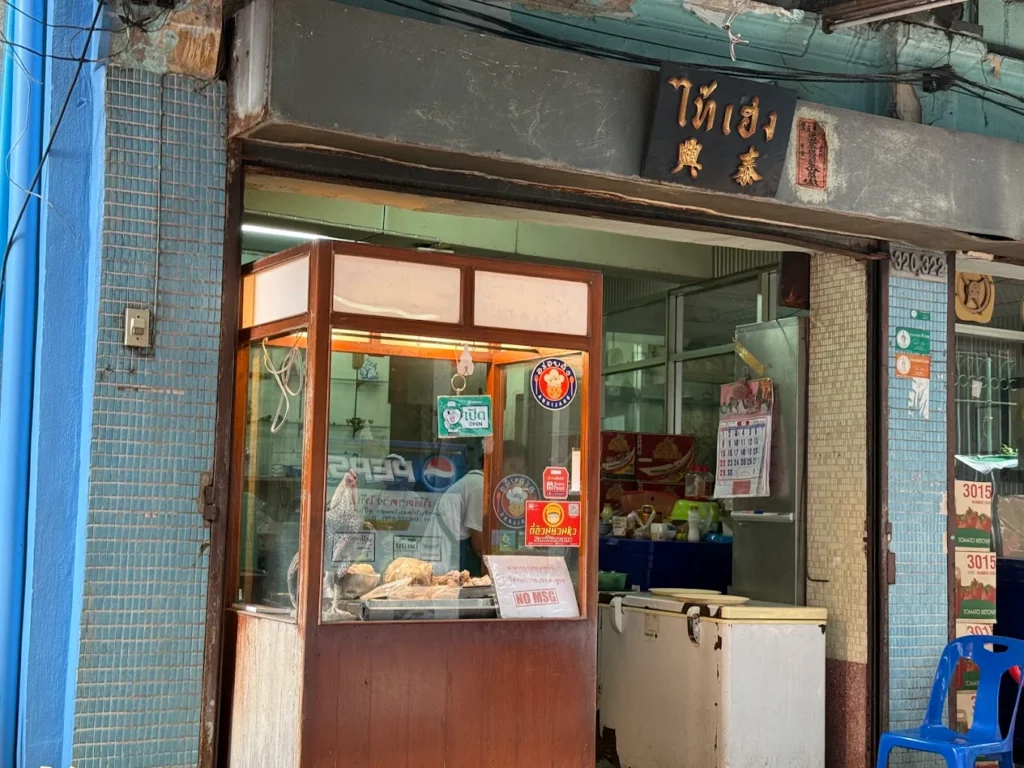
OG’s secret recipe Hainanese chicken rice
Stepping into Thai Heng is akin to entering a living archive of Hainanese migration. This multi-generational shop has perfected the deceptive simplicity of Khao Man Gai (Chicken Rice). The chicken is poached at sub-boiling temperatures to achieve a silky, gelatinous skin and moist flesh, but the true brilliance lies in the rice. Cooked with chicken fat, ginger, and garlic, each grain is an independent pearl of savory flavor, traditionally served with a ginger-heavy fermented soybean sauce.
7. Tu Huan Song Phi Nong
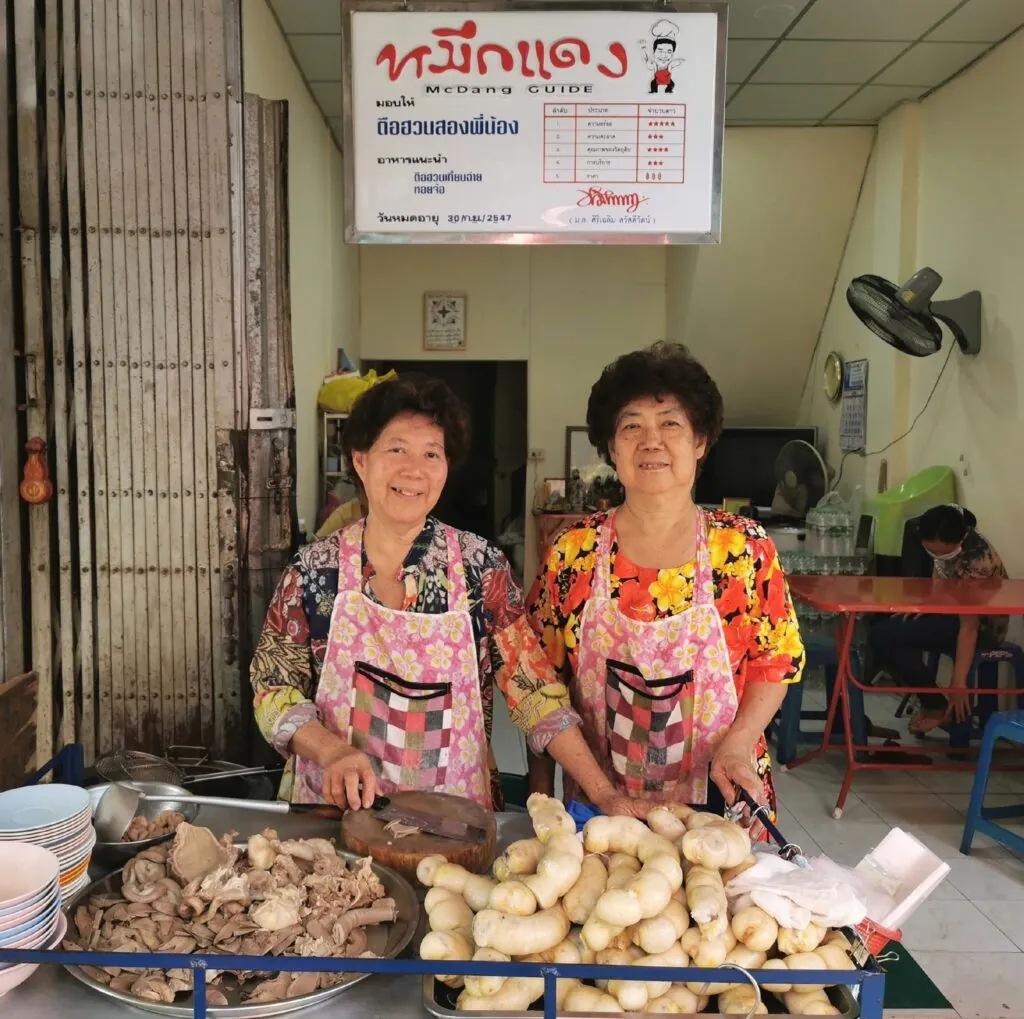
A traditional Teochew-style clear pork offal soup
This stall represents the peak of Teochew “nose-to-tail” philosophy. Specializing in Tu Huan (pig intestine soup), the “Two Brothers” have mastered the arduous cleaning process required to transform offal into a delicacy. The soup is characterized by its sharp, vinegary clarity, derived from premium pickled mustard greens. It is best enjoyed with Khao Niaw Maew, a rare and labor-intensive sticky rice sausage that is a signature of the house and a dwindling artifact of old Yaowarat.
8. Lao Song Heng
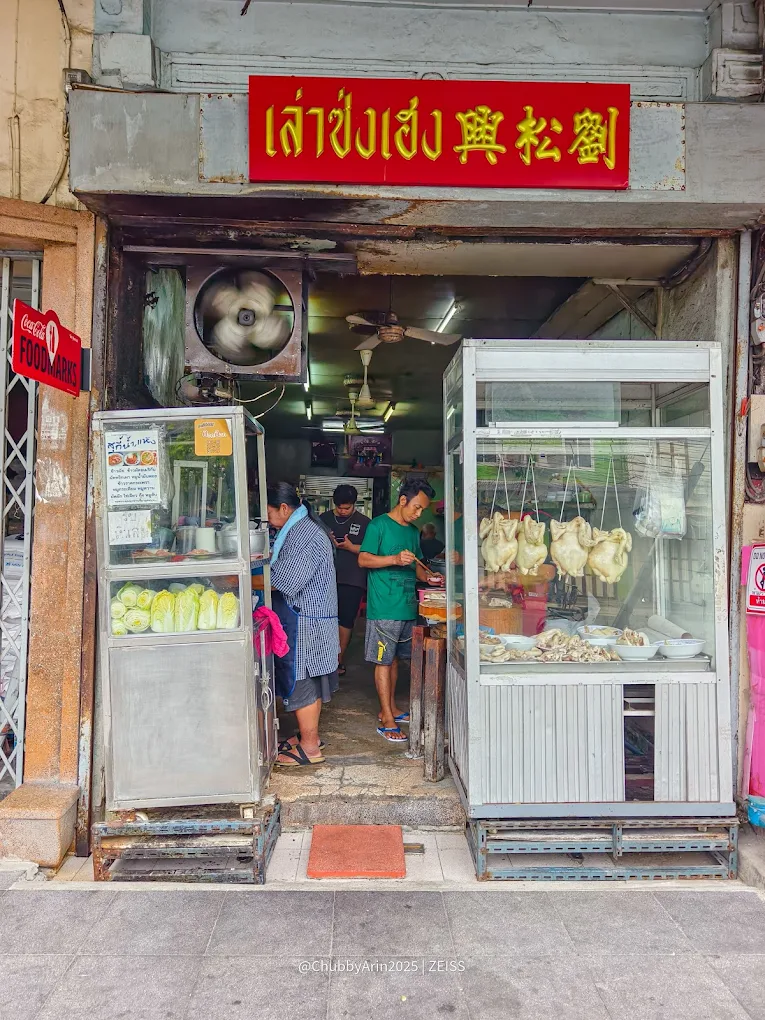
The legend of American fried rice
Lao Song Heng is a temple of the braise, renowned throughout the city for its mastery of traditional Teochew goose. The preparation is an exercise in patience; the geese are bathed in a complex, dark liquor of five-spice and soy that has been refined over decades. The result is meat of exceptional depth and a skin that carries a smoky, herbal richness. Served with a pungent vinegar and garlic dipping sauce, it is a dish that demands and rewards contemplation.
9. Rad Na Heng Yod Phak
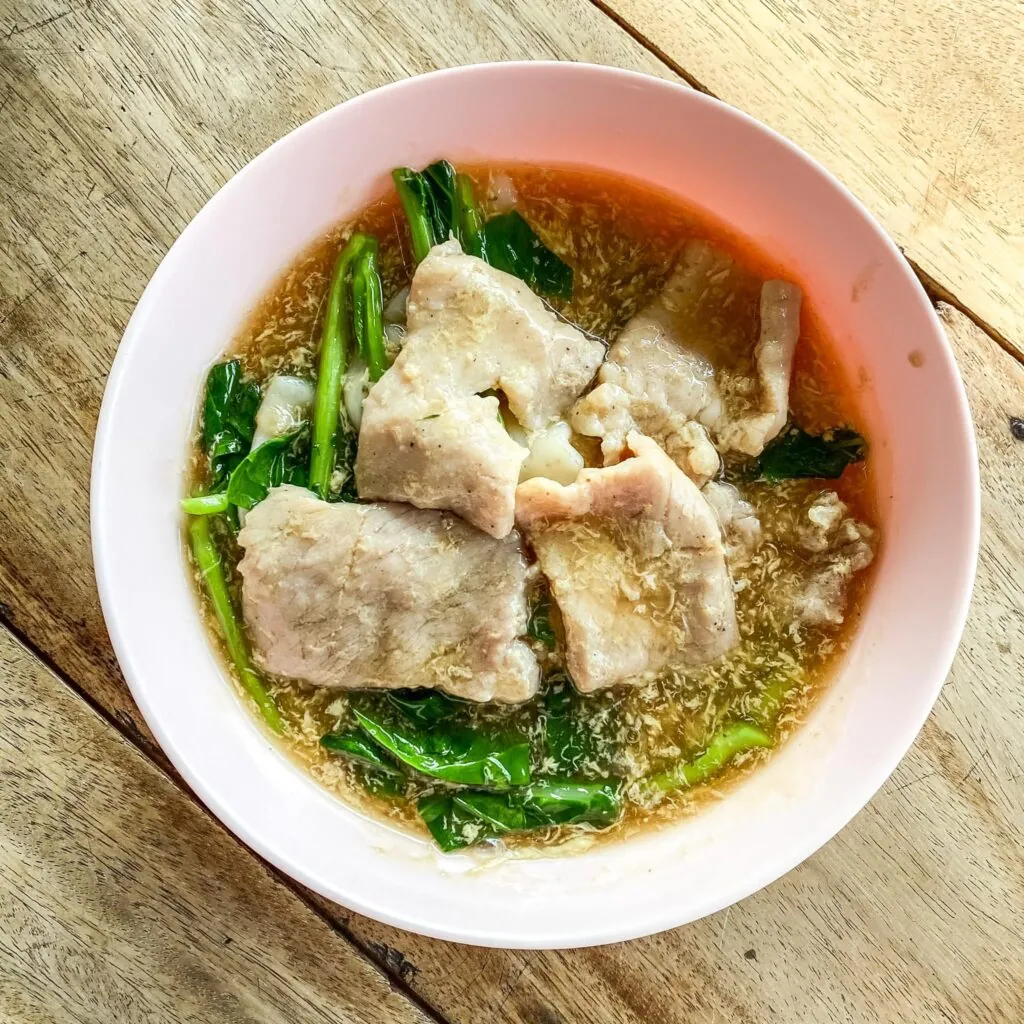
The famous savory thick gravy poured over noodles.
While Rad Na is a staple of Thai street life, this establishment elevates the dish through a meticulous obsession with texture. The name “Yod Phak” refers to the tenderest young tips of Chinese kale, selected for their crisp snap. The gravy is thick and glossy, imbued with a pronounced wok hei (breath of the wok) that seasons the wide rice noodles. It is a sophisticated interplay of charred aromatics and velvety sauce that has earned it a permanent place in the hearts of Bangkok’s food elite.
10. Nai Hui – Leng Buay Ia Market
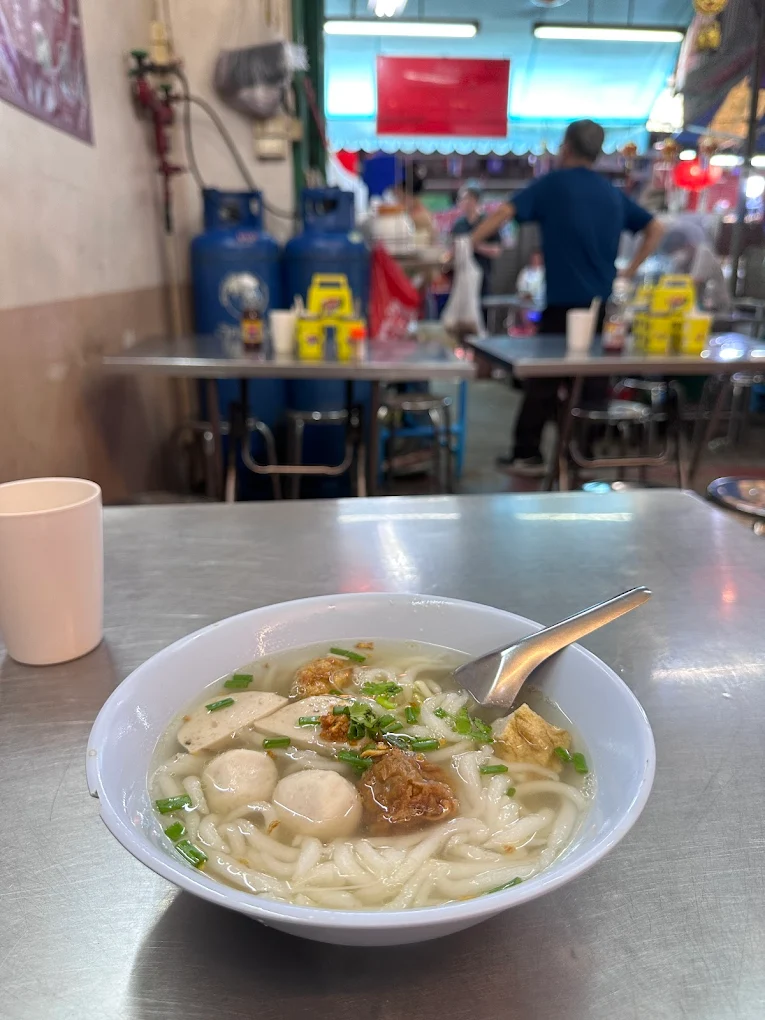
Hidden gem of homemade fish balls in the heart of Yaowarat.
Tucked deep within Chinatown’s oldest market, Nai Hui is a pilgrimage site for fishball noodle enthusiasts. Their handmade fish balls are renowned for their “bouncing” texture and pure flavor, free of flour or a fishy aftertaste. It is a rustic, heritage-rich bowl that captures the very essence of market-side dining.
These ten restaurants do not simply serve meals; they protect the cultural soul of the Thai-Chinese diaspora. To dine here is to recognize that Bangkok’s most sophisticated flavors are found where the fire is oldest and the history is deepest.