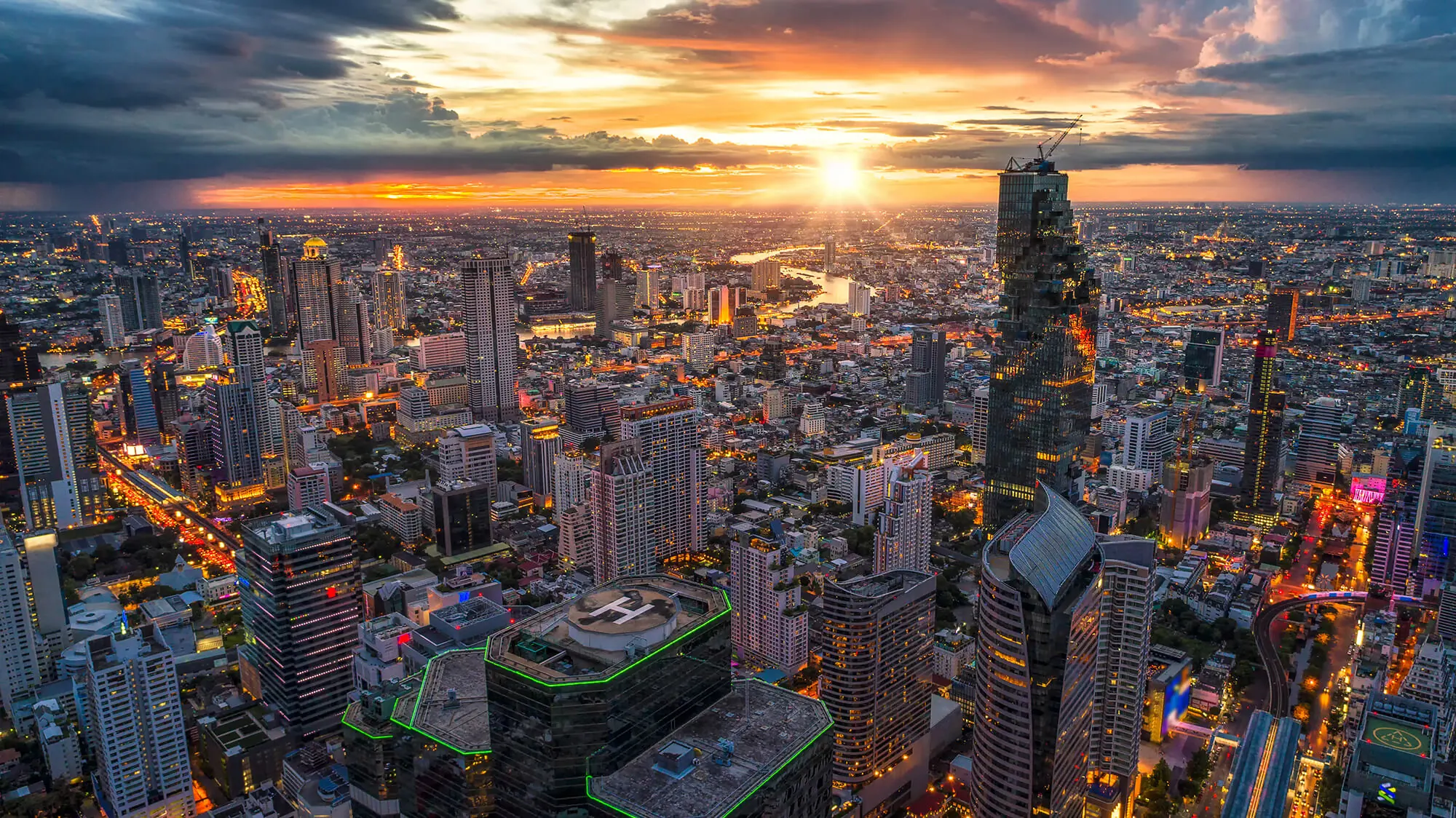
Bangkok has always been intense at street level. Traffic, heat, street food smoke, neon lights all fighting for your attention at once. But step into an elevator, go up 40, 50, sometimes 70 floors, and the city rewrites itself completely. Rooftop culture in Bangkok isn’t just about drinks with a view anymore. It’s become a defining layer of how the city is experienced. From cinematic skyline decks to jungle-themed bars floating above Sukhumvit, Bangkok has quietly built one of the most dynamic rooftop scenes in the world.
A City Best Seen From Above
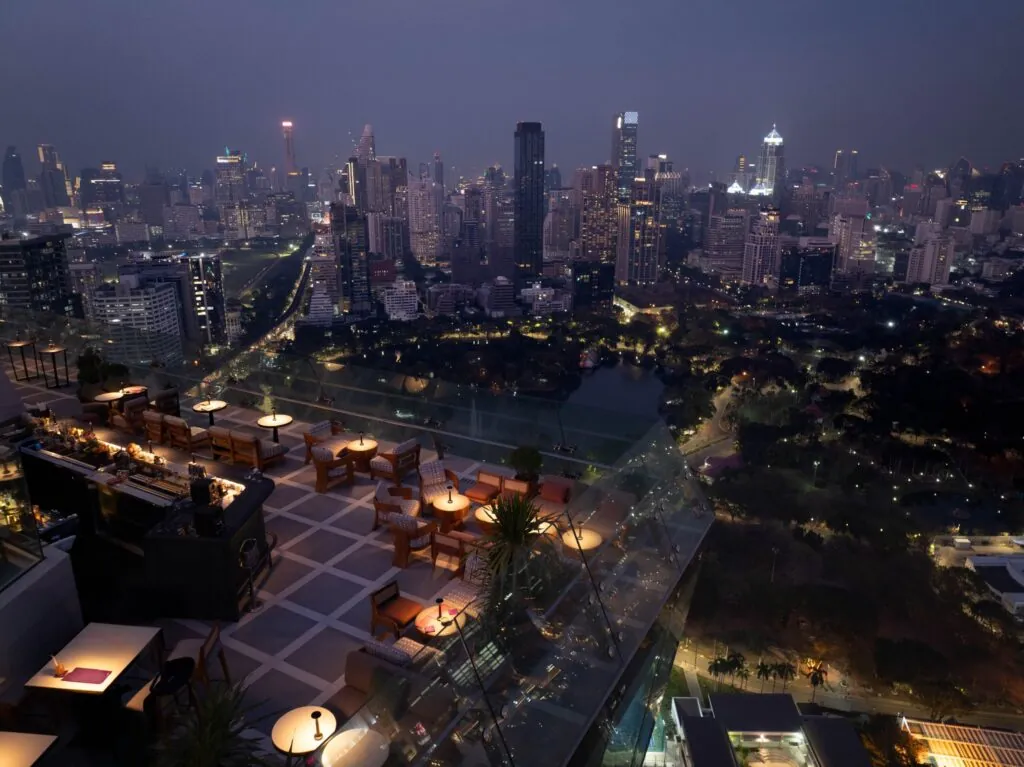
There’s something almost paradoxical about Bangkok. The higher you go, the calmer it feels.
Down below, the city moves fast and loud. Up top, everything slows into a panoramic rhythm of lights, rivers, and endless skyline. That contrast is exactly why rooftop culture works here. It gives you distance without disconnecting you from the energy.
Over the past decade, developers and hospitality brands have leaned into this. Skyscrapers are no longer just functional spaces. They are experiences. And rooftops have become their most valuable real estate, not for living, but for storytelling.
From Viewpoint to Social Currency
Rooftops in Bangkok have evolved beyond just “nice views.” They’ve become part of the city’s social identity.
Posting a skyline shot is no longer optional, it’s expected. The first three seconds of a video, the opening frame of a reel, the backdrop of a cocktail moment. These spaces are designed for that exact purpose. High-impact, visually striking, instantly recognizable.
But what makes Bangkok different is accessibility. Unlike cities where rooftop experiences feel exclusive or intimidating, here they’re surprisingly open. You can move from a street food dinner to a world-class skyline in under an hour, and that transition feels completely natural.
The New Icons of Bangkok’s Skyline Scene
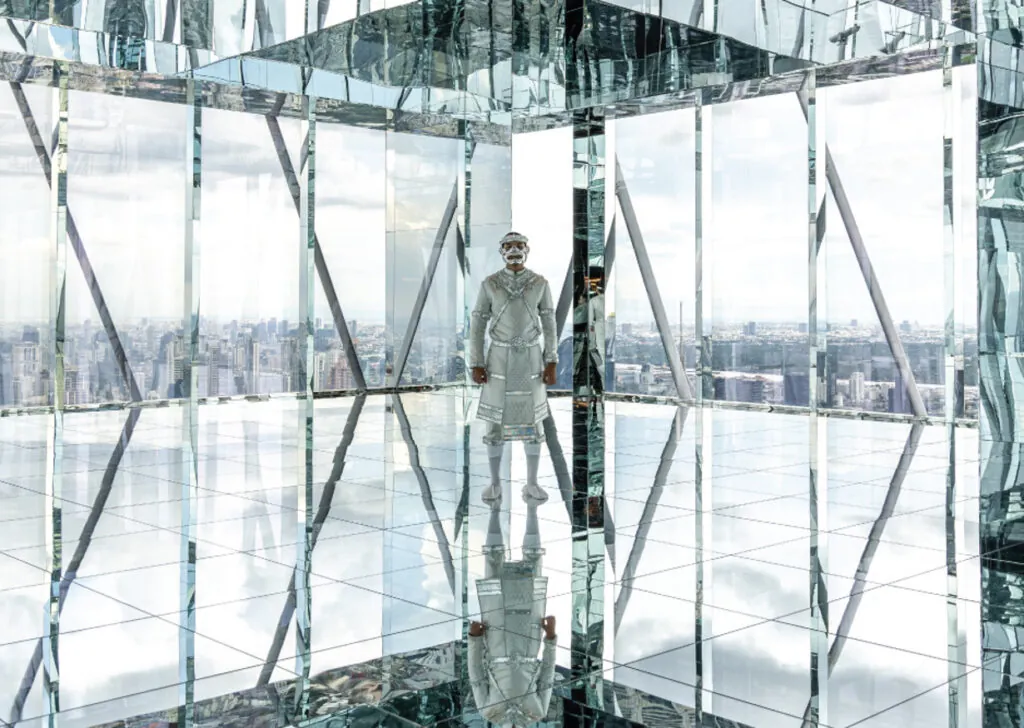
King Power Mahanakhon anchors the city’s modern skyline, and its rooftop experience, often referred to as Mahanakhon Sky, delivers one of the most surreal perspectives in Bangkok. Standing on a glass floor hundreds of meters above the ground feels less like a bar visit and more like stepping into a different dimension of the city.
Not far from the polished glass-and-steel aesthetic, Tichuca Rooftop Bar takes a completely different approach. Its glowing tree installation has become one of the most recognizable visuals in Bangkok nightlife. It feels immersive, almost theatrical, like the jungle decided to grow on top of a skyscraper.
Then there’s Vertigo and Moon Bar, one of the originals that defined Bangkok’s rooftop culture long before it became global. Located atop Banyan Tree, it offers a more classic, open-air experience where the skyline stretches endlessly in every direction without obstruction.
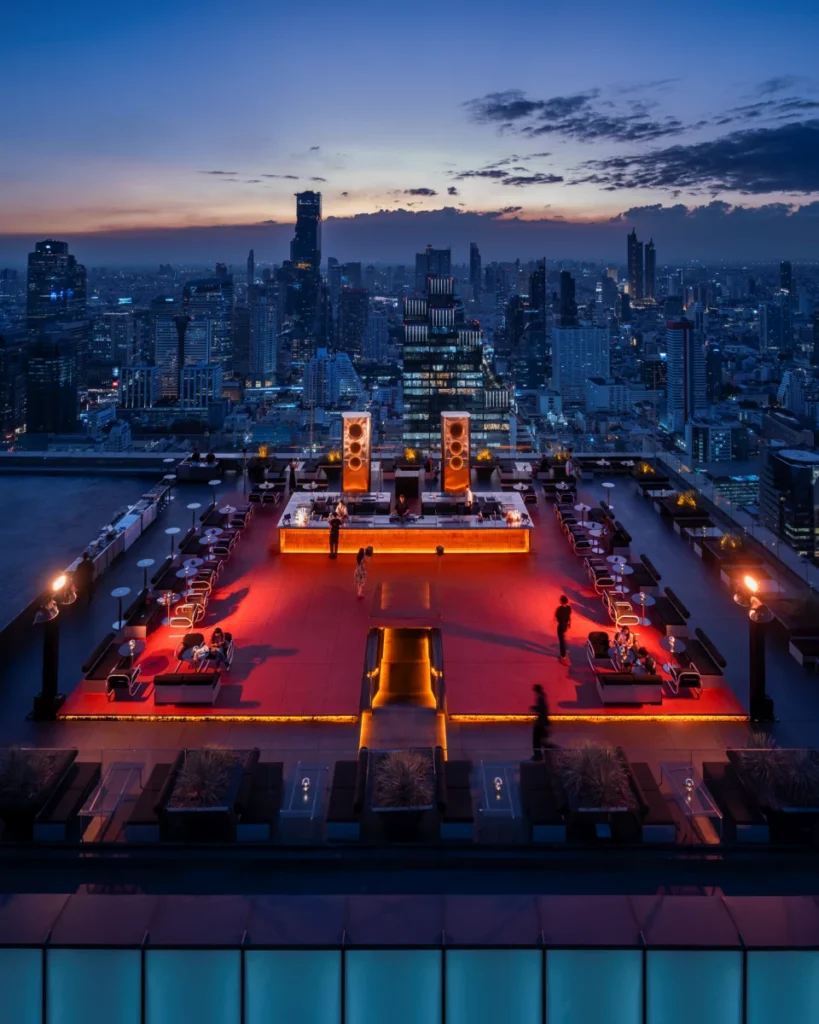
Newer entries like Spire Rooftop Bar and Aether Rooftop Bar reflect the next phase of rooftop design. More curated, more atmospheric, and built with a clear understanding of modern aesthetics. Lighting, layout, and music are all tuned to create a specific mood rather than just showcasing height. While Spire aim to be more casual leisuring looking down the city, Aether approach is with viby techno music with each night having different DJs that sometime imported from overseas, so the vibe of each night is totally different.
And then there’s Akara Sky Hanuman Bangkok, which blends Thai mythology with rooftop spectacle. The giant Hanuman figure overlooking the skyline adds a cultural layer to the experience, making it feel distinctly Bangkok rather than interchangeable with any global city.
Why Bangkok’s Rooftop Culture Hits Different
What makes Bangkok stand out isn’t just the number of rooftops, but the diversity of experiences within them.
You can go ultra-luxury, cinematic, jungle-themed, minimalist, or culturally inspired all within the same city. And importantly, you can do it without the rigid formality found in other global capitals.
There’s a certain fluidity here. Dress codes exist, but they’re not oppressive. The vibe can shift from relaxed to upscale depending on where you go, and both feel equally valid.
That flexibility is what makes rooftop culture in Bangkok feel alive. It adapts to you rather than forcing you into a predefined experience.
The Future: Rooftops as the New Urban Identity
As Bangkok continues to grow vertically, rooftop culture will only become more central to its identity.
New developments are already integrating rooftop concepts from the start, treating them as key attractions rather than afterthoughts. And as travelers become more experience-driven, these elevated spaces will play an even bigger role in how the city is marketed and remembered.
Because at the end of the day, Bangkok isn’t just a city you walk through anymore. It’s a city you look out over.
FAQ
When is the best time to visit rooftop bars in Bangkok?
Sunset is the prime time, usually between 5:30 PM and 7:00 PM. You get the transition from daylight to a fully lit skyline, which is the most visually striking moment.
Do rooftop bars in Bangkok have dress codes?
Most upscale venues recommend smart casual. Avoid flip-flops, sleeveless shirts for men, or overly casual beachwear, especially at higher-end locations.
Are rooftop bars expensive in Bangkok?
They are more expensive than street-level venues, but still relatively affordable compared to cities like Tokyo, New York, or London. You’re paying for the view as much as the drink.
Do you need reservations?
For popular spots like Vertigo or during weekends at Tichuca, reservations are recommended. Walk-ins are possible but may involve waiting.
Is it worth visiting more than one rooftop?
Yes. Each rooftop offers a completely different vibe and perspective of the city. Exploring multiple locations gives you a fuller experience of Bangkok’s skyline culture.