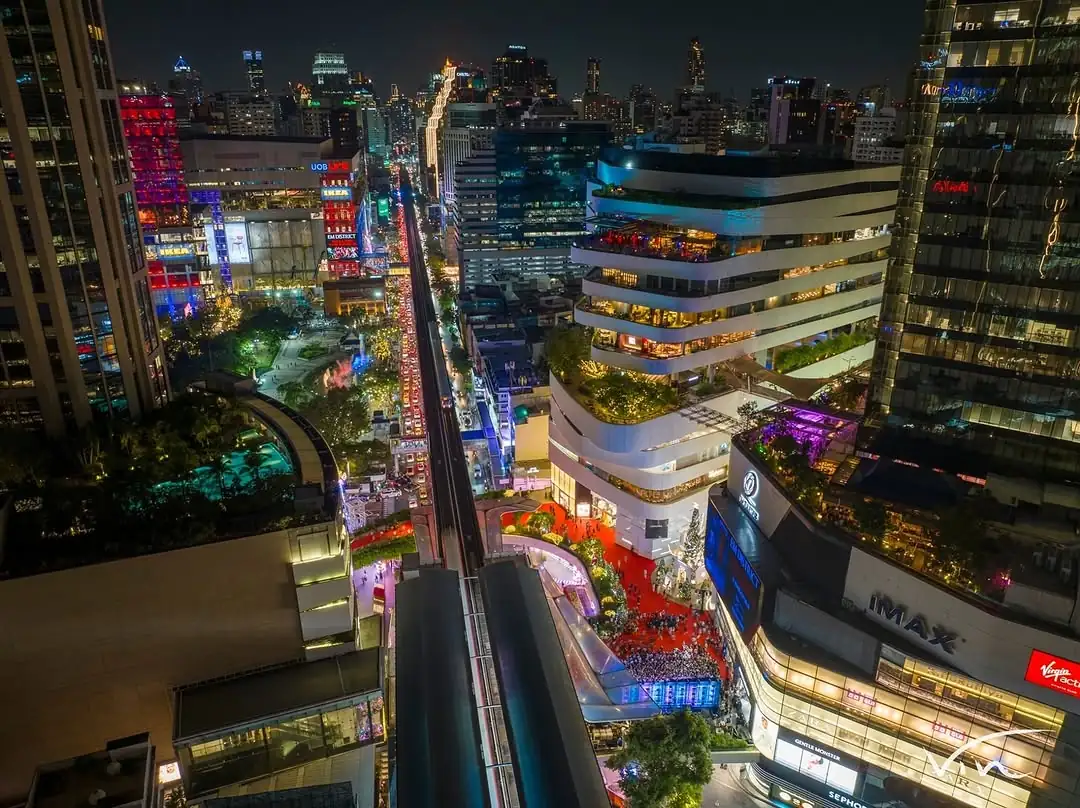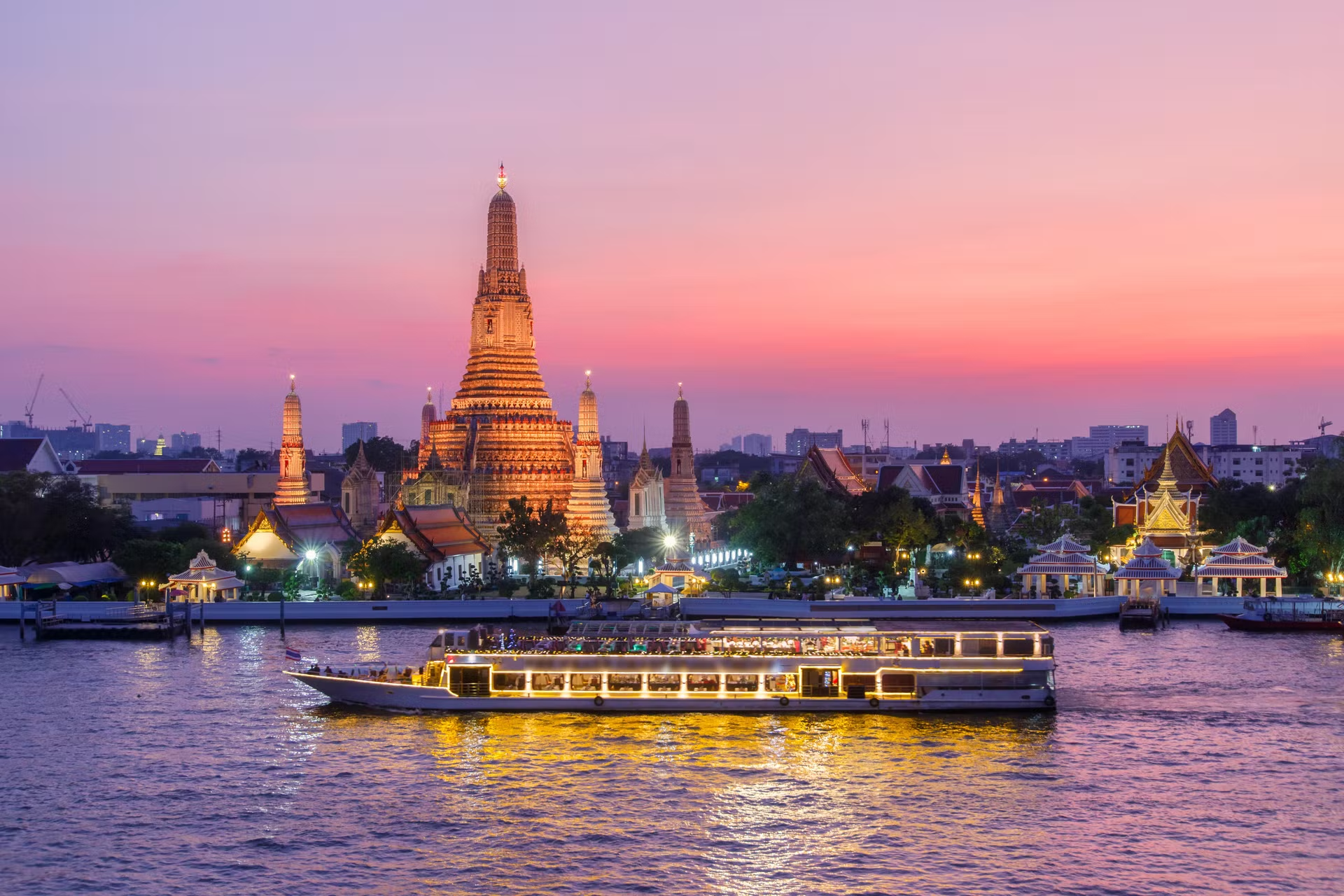
Bangkok is often introduced through its skyline, rooftop bars, luxury malls, and nonstop traffic, but beneath the concrete and BTS tracks lies the city’s original transportation network: water. Long before expressways sliced through the capital, Bangkok moved through rivers and canals. The city was once called the “Venice of the East,” not as a marketing slogan, but because daily life genuinely revolved around waterways. Homes faced canals instead of roads, merchants sold food directly from boats, and commuting by water was once faster than traveling on land.
Today, that historic system still exists, although it has transformed into a fascinating hybrid of heritage, practicality, and urban survival. Bangkok’s water transport network now operates as both a tourist experience and a very real commuting option for locals trying to avoid the city’s infamous traffic. From the massive Chao Phraya River cutting through the heart of the capital to the narrow khlongs threading quietly behind neighborhoods, Bangkok’s aquatic transit system reveals a completely different side of the city, one that many tourists never fully experience.
The Chao Phraya River: Bangkok’s Main Artery
At the center of Bangkok’s water transport ecosystem is the Chao Phraya River, the historic river that shaped the city’s growth for centuries. Stretching through the heart of the capital, the river connects old Bangkok, modern business districts, royal landmarks, luxury hotels, shopping complexes, and local riverside communities all within a single route.
Unlike metro systems that disappear underground, the Chao Phraya feels cinematic. Commuters pass glittering temples, colonial architecture, mega malls, local homes on stilts, and five-star riverside hotels all within the same journey. The experience almost feels like Bangkok revealing its layers in real time.
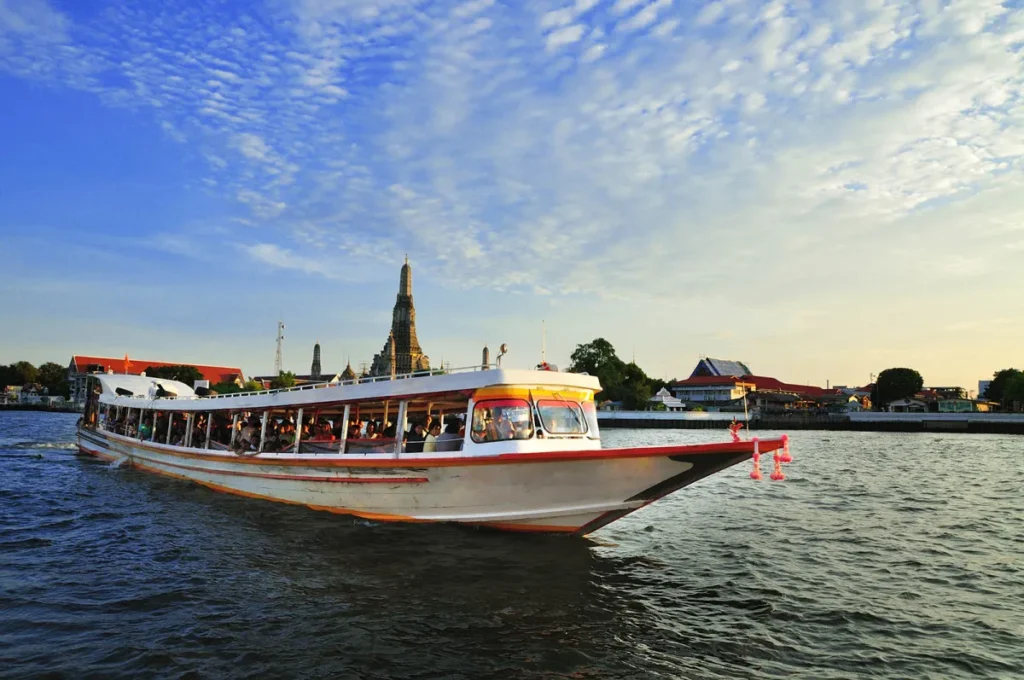
The most commonly used service on the river is the Chao Phraya Express Boat. These public commuter boats operate much like a floating bus network, stopping at piers marked by different colored flags. Understanding the flag system is essential because each color represents a different route and stopping pattern.
The Orange Flag boats are the most recommended for tourists and casual travelers because they stop at many major piers while remaining inexpensive and frequent. The Green-Yellow Flag boats operate longer commuter-focused routes mainly during rush hour and are used heavily by locals traveling from outer districts. Yellow Flag boats are slightly faster express services with fewer stops, while boats without flags are local line services that stop at nearly every pier. Blue Flag boats are generally tourist-oriented services with clearer announcements and hop-on-hop-off style convenience.
For first-time visitors, the orange flag line usually offers the best balance between convenience, authenticity, and simplicity.
For visitors, the river route is also one of the easiest ways to explore Bangkok’s cultural core. Boats connect directly to landmarks such as Wat Arun, Grand Palace, Wat Pho, and shopping destinations like ICONSIAM and Asiatique The Riverfront. Many tourists end up realizing that river transport is not just scenic but actually faster than taxis during rush hour.
One of the most important transport connections is at Sathorn Pier, directly linked to the BTS Skytrain at Saphan Taksin Station. This interchange effectively connects rail and river systems together, making the Chao Phraya a functional extension of Bangkok’s mass transit network rather than merely a sightseeing attraction.
Tourist Boats vs Local Boats
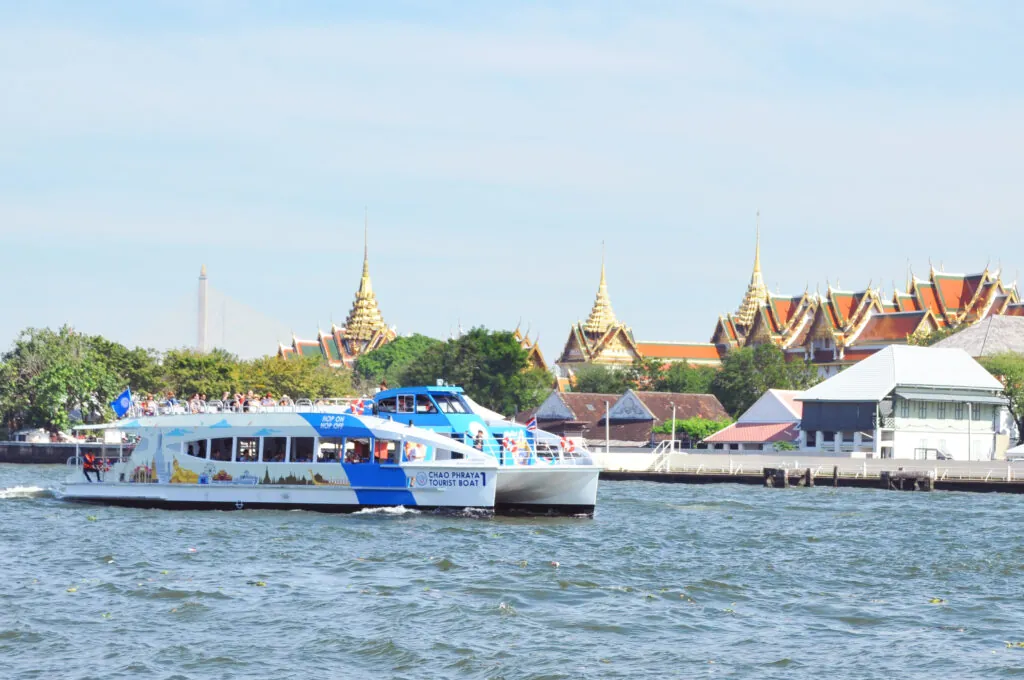
One fascinating aspect of Bangkok’s river transport system is the contrast between tourist-oriented boats and local commuter services. Many first-time visitors instinctively board tourist boats because they appear easier to understand, often offering unlimited day passes and English announcements. These boats are comfortable and beginner-friendly, but locals rarely use them.
The local commuter boats, meanwhile, feel far more authentic. Office workers, students, monks, vendors, and elderly residents all pack onto narrow river boats with surprising efficiency. Boarding can feel intense at first because stops are incredibly quick. The boat arrives, passengers jump off, others jump on, and within seconds the vessel speeds away again. There is almost no hesitation in the choreography. Bangkok commuters treat river transport with the same rhythm as subway systems in Tokyo or Hong Kong.
For travelers willing to step slightly outside the tourist bubble, local river boats offer one of the best ways to understand Bangkok’s everyday urban flow.
Bangkok’s Canal Network: The Hidden City
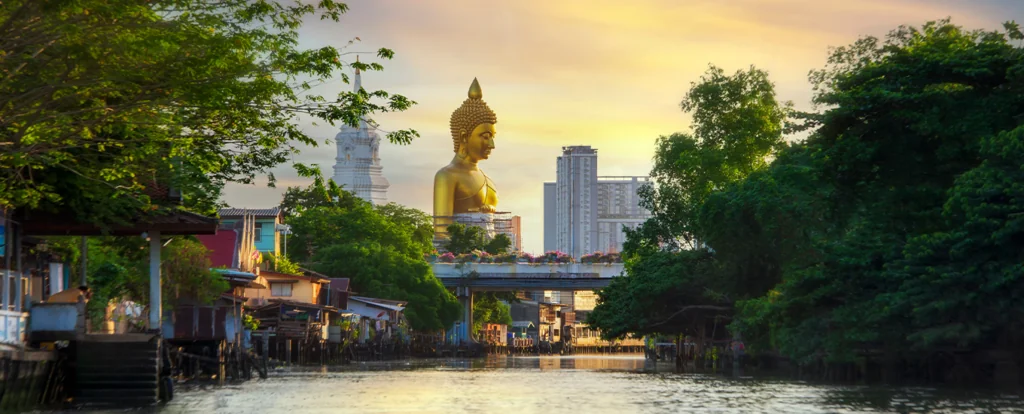
While the Chao Phraya River receives most international attention, Bangkok’s canal system, known locally as khlongs, is arguably even more fascinating. These canals once formed an enormous transportation web connecting neighborhoods across the capital. Although many khlongs were filled in to build roads during Bangkok’s modernization, several major canal routes still function today.
The most important commuter canal route is the Saen Saep Canal Boat service. For newcomers, it feels almost chaotic in the best possible way. Long narrow boats race through the canals at remarkable speed while conductors sprint across unstable edges collecting fares with superhero-level balance. Water splashes dramatically as boats pass each other in tight waterways, and passengers quickly learn to pull down plastic shields to avoid getting sprayed.
Yet despite the apparent madness, the system works astonishingly well.
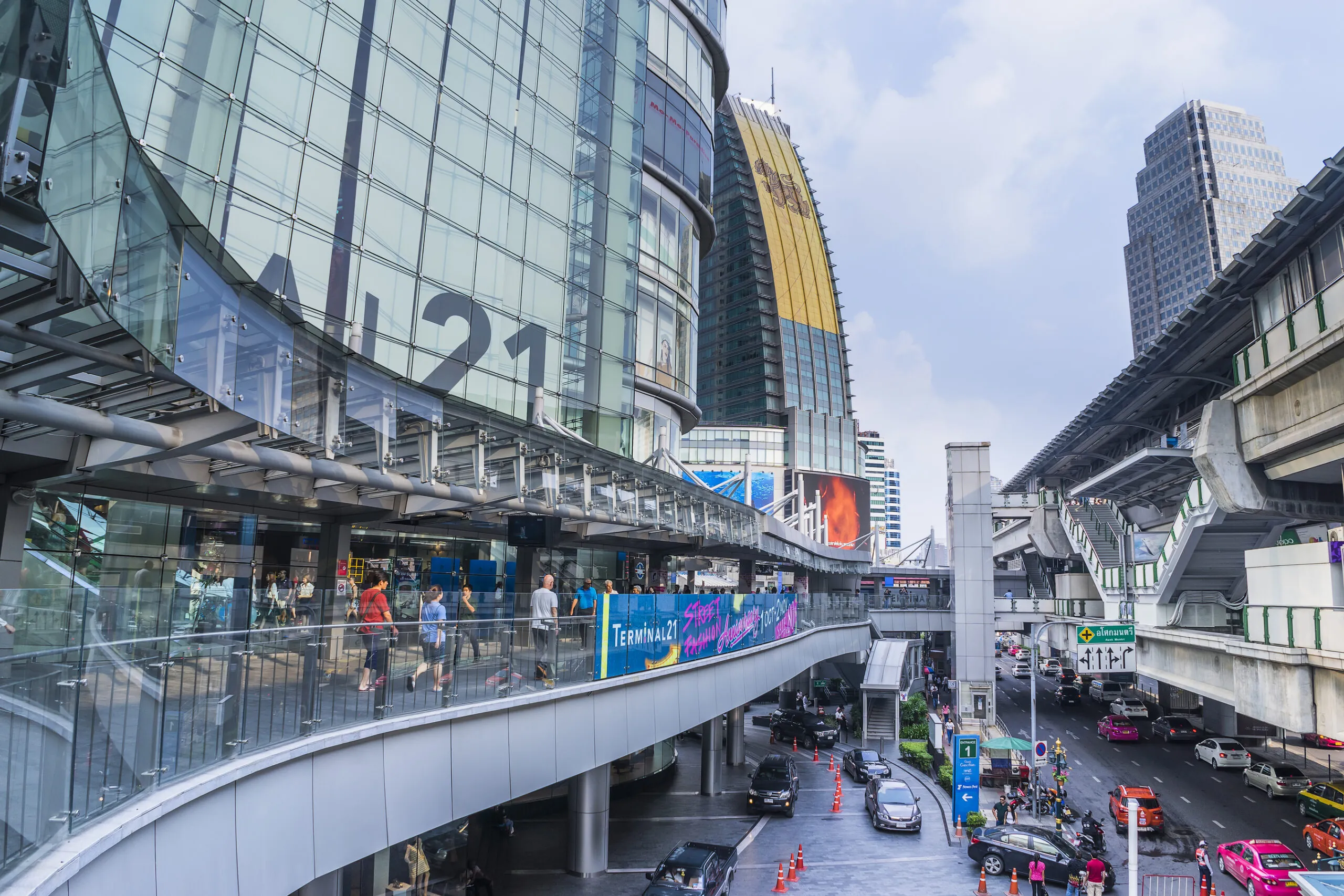
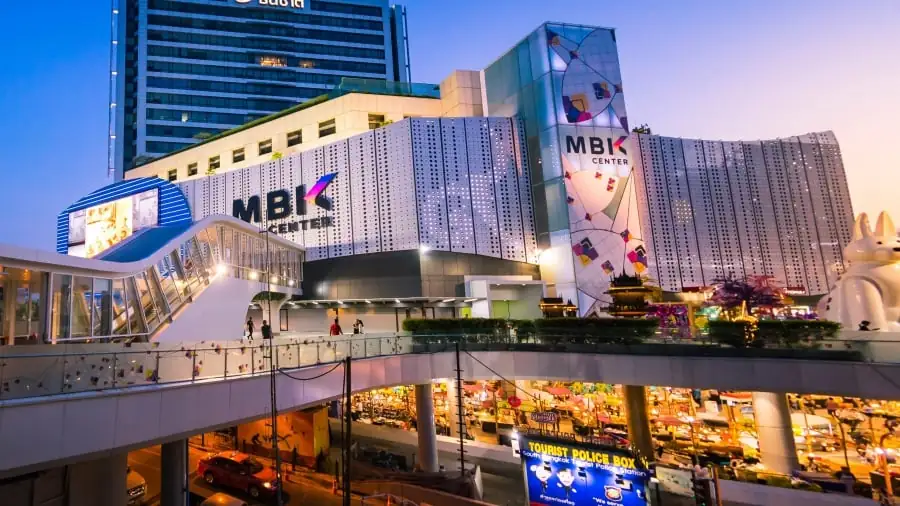
The Saen Saep route cuts directly through some of Bangkok’s most congested districts, including areas near Pratunam, CentralWorld, MBK Center, and Ramkhamhaeng. During rush hour, canal boats often move significantly faster than cars trapped on surrounding roads. For many office workers and students, these boats are not a novelty but an essential daily transportation method.
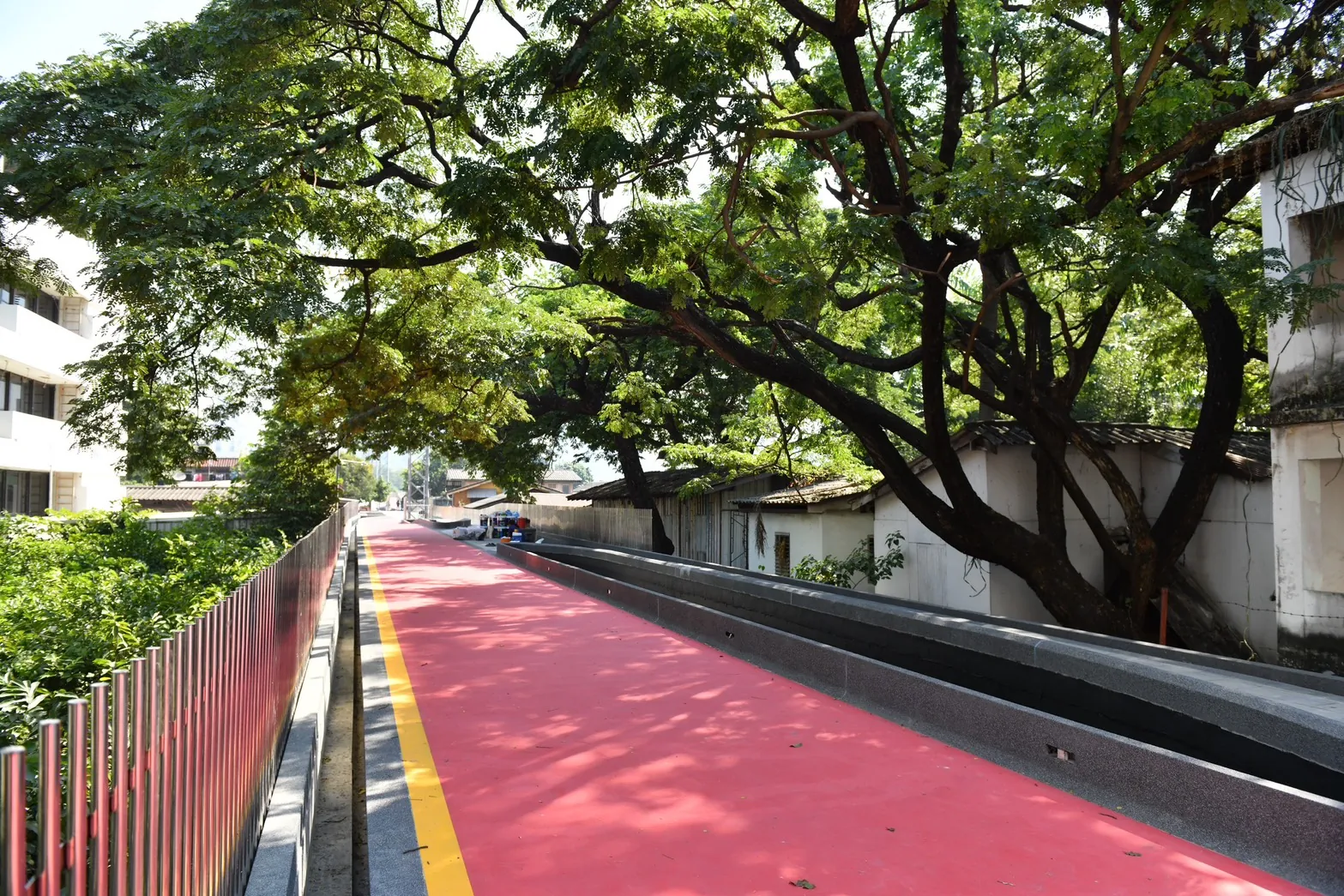
Beyond Saen Saep, Bangkok has quietly expanded other canal routes that many tourists barely know exist. The Phadung Krung Kasem Boat Service operates along the historic Khlong Phadung Krung Kasem, running through Bangkok’s old city zones near Hua Lamphong and Thewes. Unlike the high-speed chaos of Saen Saep, this route feels calmer and more community-oriented. Electric boats glide slowly past old shop houses, temples, government buildings, and local riverside communities, offering a softer glimpse into everyday Bangkok life.
Another culturally important waterway is the Bangkok Noi Canal system on the Thonburi side of the city. Bangkok Noi Canal reveals an older atmosphere that contrasts sharply with central Bangkok’s skyscrapers. Traditional wooden houses, canal-side temples, local markets, and long-tail boats still define parts of the area. Boat tours through Bangkok Noi and neighboring canals remain one of the best ways to experience the remnants of historic canal culture that once dominated the capital.
What makes the khlong system unique is how deeply local it feels. Unlike the polished BTS or MRT systems, canal boats expose the city in raw form. Riders pass temples hidden behind apartment blocks, wooden homes leaning over waterways, street food vendors preparing lunch beside the canal, and neighborhoods tourists rarely explore. Bangkok suddenly feels less like a curated travel destination and more like a living organism.
The Cultural Legacy of Bangkok’s Waterways
Bangkok’s relationship with water is deeply cultural. The city’s canal system was not originally designed for tourism or leisure; it was survival infrastructure. Before modern roads, canals functioned as highways for trade, transportation, and daily life. Floating markets flourished because boats were the primary way communities interacted.
Even today, remnants of that water-based culture survive across Bangkok. Traditional long-tail boats still operate in some canals. Riverside shrines and temples remain central to local communities. Morning offerings to monks continue along canal neighborhoods. In many parts of the city, life still unfolds beside the water exactly as it did generations ago, just with smartphones and delivery apps added into the mix.
There is also something emotionally different about seeing Bangkok from the water. The city becomes softer. The noise of traffic fades slightly. Glass skyscrapers reflect across rippling canals while old wooden homes stand beside luxury condominiums. Bangkok’s contrasts become more visible and strangely more understandable when viewed from a boat.
For tourists, using Bangkok’s waterways transforms the city experience completely. Instead of simply arriving at destinations, the journey itself becomes part of the story. You are not just commuting. You are floating through centuries of Bangkok history while watching one of Asia’s most dynamic cities unfold around you.
FAQ
Is Bangkok water transport safe?
Yes, Bangkok’s public boat systems are generally safe and heavily used by locals every day. However, passengers should move carefully while boarding because boats stop briefly and platforms can sometimes be slippery.
Which Chao Phraya boat flag is best for tourists?
The Orange Flag boats are usually the best choice because they stop at many major tourist attractions while remaining affordable and easy to use.
Can tourists use canal boats?
Absolutely. The Saen Saep Canal Boat is open to everyone and is one of the fastest ways to travel across central Bangkok. It may feel intimidating initially, but many tourists end up loving the experience.
What is the difference between river boats and canal boats?
River boats operate mainly on the wide Chao Phraya River and connect major landmarks and business districts. Canal boats travel through narrower inner-city waterways and are primarily used for local commuting.
Are Bangkok boats cheaper than taxis?
In most cases, yes. Public boat fares are usually very affordable and often significantly cheaper than taxis stuck in traffic.
What should tourists prepare before taking canal boats?
It is best to carry small cash, wear comfortable shoes, and avoid standing too close to the edge while boarding. On some canal boats, passengers may also encounter occasional water splashes.
Which canal route is best for experiencing old Bangkok?
The Bangkok Noi and Thonburi canal areas are among the best places to experience Bangkok’s older waterside lifestyle, traditional wooden homes, and quieter local atmosphere.