Getting scammed on your trip is not exactly the story you want to bring home. Bangkok is an incredible city, but like any major destination, a few classic tuk-tuk and taxi tricks still catch travelers off guard. The good news is you do not need to be a seasoned visitor to outsmart them. With a little know-how and the right instincts, you can ride around the city with total confidence and keep your travel budget exactly where it belongs. Here is how to spot the red flags and move through Bangkok like a pro.
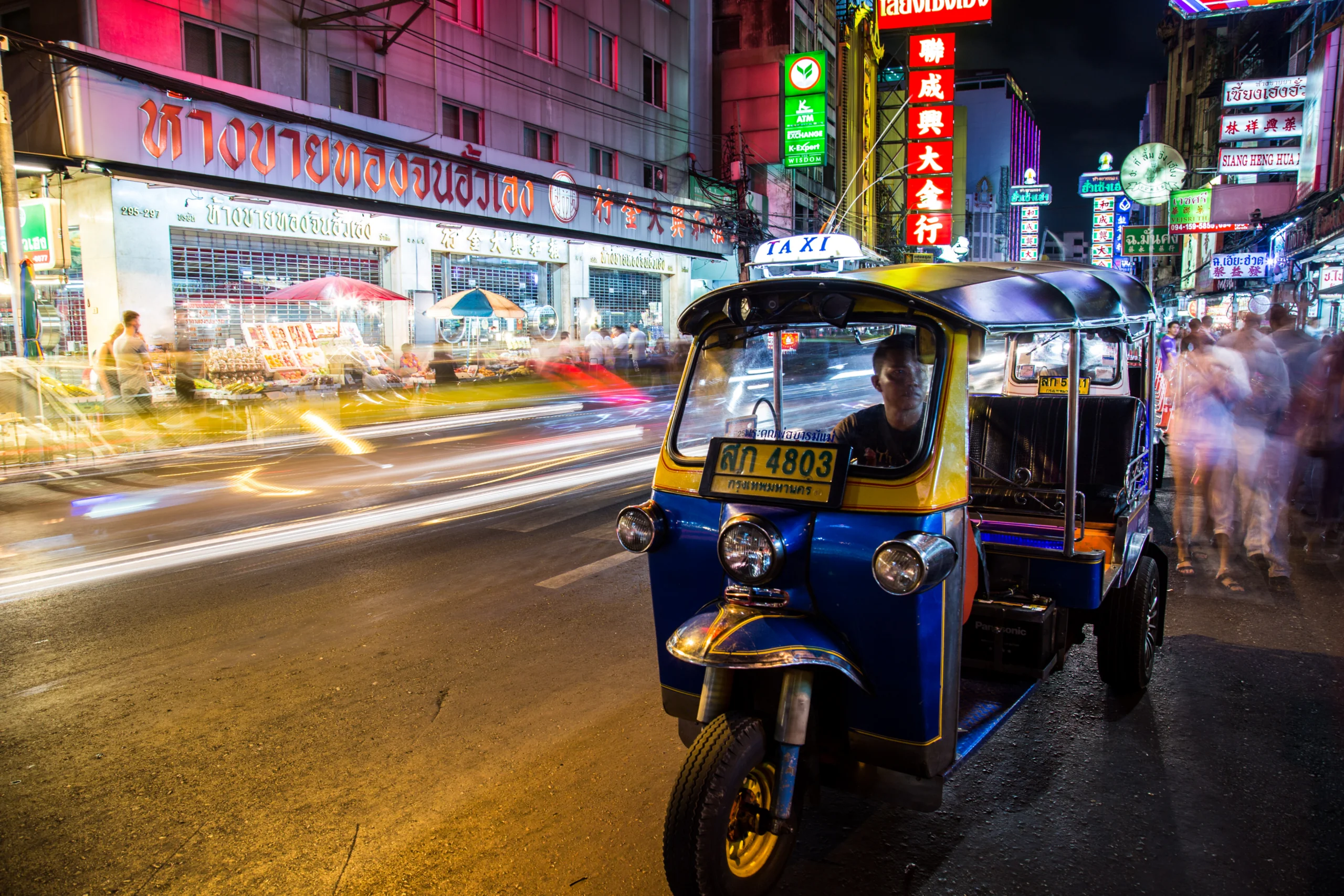
Understand How Tuk Tuks Actually Work
Tuk tuks are not metered vehicles. Prices are negotiated before the ride begins. This means fares can vary widely depending on distance, traffic, and driver expectations.
A common scam involves a driver offering an unusually cheap fare, then adding surprise stops at tailors, jewelry shops, or souvenir stores along the way. Drivers receive commissions from these shops, which is why they push detours. If a fare sounds too good to be true, it usually comes with conditions.
To avoid this, clearly state your destination and confirm the price before getting in. If the driver mentions additional stops, politely decline and walk away. There are always more tuk tuks nearby.
Always Insist on the Taxi Meter
Unlike tuk tuks, taxis in Bangkok are required by law to use the meter. A frequent issue occurs when drivers refuse to turn it on and instead quote a flat rate, often significantly higher than the real fare.
When entering a taxi, say politely but firmly, “Meter please.” If the driver refuses, simply exit and find another taxi. This is normal practice and not considered rude. In busy tourist areas like the Grand Palace or major malls, some drivers may try to negotiate higher fixed prices. Patience is your advantage.
Avoid the “Attraction Is Closed” Trick
One of the most common linked scams starts with a tuk tuk or taxi driver telling you that a major attraction is closed for a holiday, ceremony, or special event. They then offer to take you somewhere else, usually to a shop or alternative tour.
If someone says a landmark such as the Grand Palace is closed, walk to the official entrance and check for yourself. Do not rely on street claims. This scam targets first time visitors who are unsure of opening hours.
Use Ride Hailing Apps When Possible
Ride hailing apps add a layer of price transparency and route tracking. They reduce the need for fare negotiation and help avoid language misunderstandings.
Apps are particularly helpful during rush hour or in nightlife districts where taxis may refuse short rides. While small price differences can still occur, the experience is usually smoother and more predictable.
Watch the Route Without Obsessing
Occasionally, taxi drivers may take a longer route to increase the fare. This is not extremely common, but it can happen.
Use a map app on your phone to casually monitor the direction. You do not need to confront the driver unless the detour is clearly unreasonable. Simply asking, “Is this the fastest way?” is often enough to correct the route without tension.
Be Careful With Large Banknotes
Some travelers report drivers claiming they do not have change for large bills. To avoid this, carry small denominations whenever possible.
If you only have large bills, mention it before the ride begins. This prevents confusion at the end of the trip.
Trust Your Instincts and Walk Away
The simplest rule is this: if something feels uncomfortable, walk away. Bangkok has thousands of taxis and tuk tuks. You are never obligated to accept a ride.
Staying calm, polite, and confident discourages most opportunistic behavior. Scams typically rely on pressure and urgency. Removing urgency removes their advantage.
Frequently Asked Questions
Are tuk tuks safe in Bangkok
Yes. They are safe for short rides, but prices must be negotiated clearly beforehand.
Are taxi scams dangerous
No. They usually involve overcharging rather than physical danger.
Is it rude to refuse a driver
Not at all. Simply smile, say no thank you, and move on.
Is public transport safer
BTS and MRT systems are often the easiest and most transparent way to travel in Bangkok.