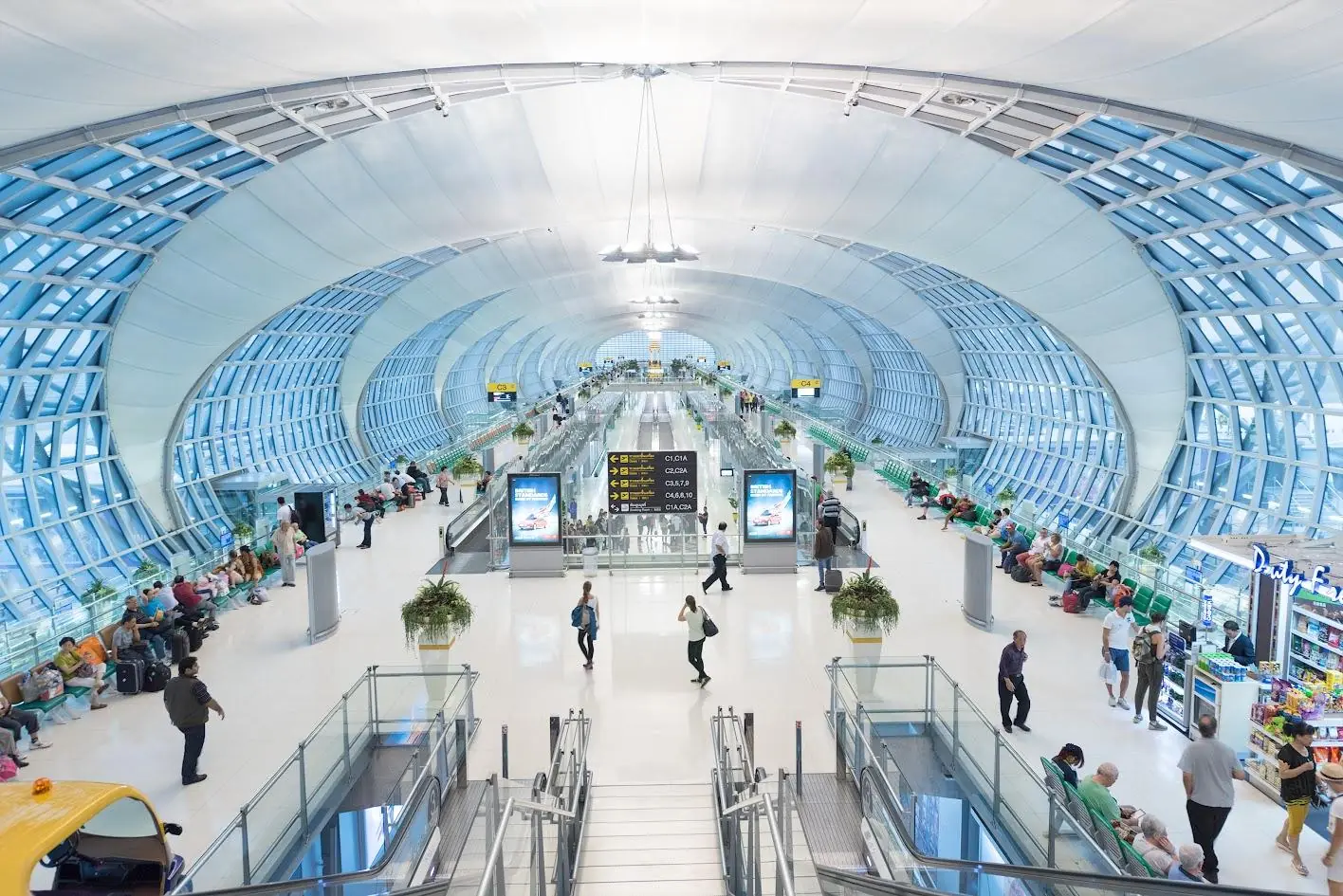
With a ceasefire now imminent between the United States and Iran, global aviation is beginning to stabilize. Flights that were once forced to avoid the Middle East are gradually returning to their original paths, and major Gulf hubs are reopening. But while the system may look like it’s resetting, something deeper has shifted. During the disruption, Southeast Asia, especially Suvarnabhumi Airport, stepped into a new role as a global transit alternative. And even as traffic flows back west, Thailand may continue to benefit from a subtle but lasting change in how the world moves.
The Ceasefire Doesn’t Mean an Instant Reset
The return of stability in the Middle East is, on the surface, a signal that aviation can go back to normal. Airlines are already preparing to restore routes through traditional hubs like Dubai and Doha, reclaiming the fastest corridors between Europe and Asia.
But aviation doesn’t operate on headlines alone. It runs on risk calculations, insurance frameworks, and long-term planning. Even with a ceasefire, confidence takes time to rebuild. Airlines tend to reintroduce routes gradually, testing airspace safety, monitoring geopolitical signals, and adjusting schedules in phases rather than flipping a switch overnight.
What this means is simple. The Middle East will recover its position, but not instantly and not completely unchanged.
A Disruption That Forced the Industry to Rethink
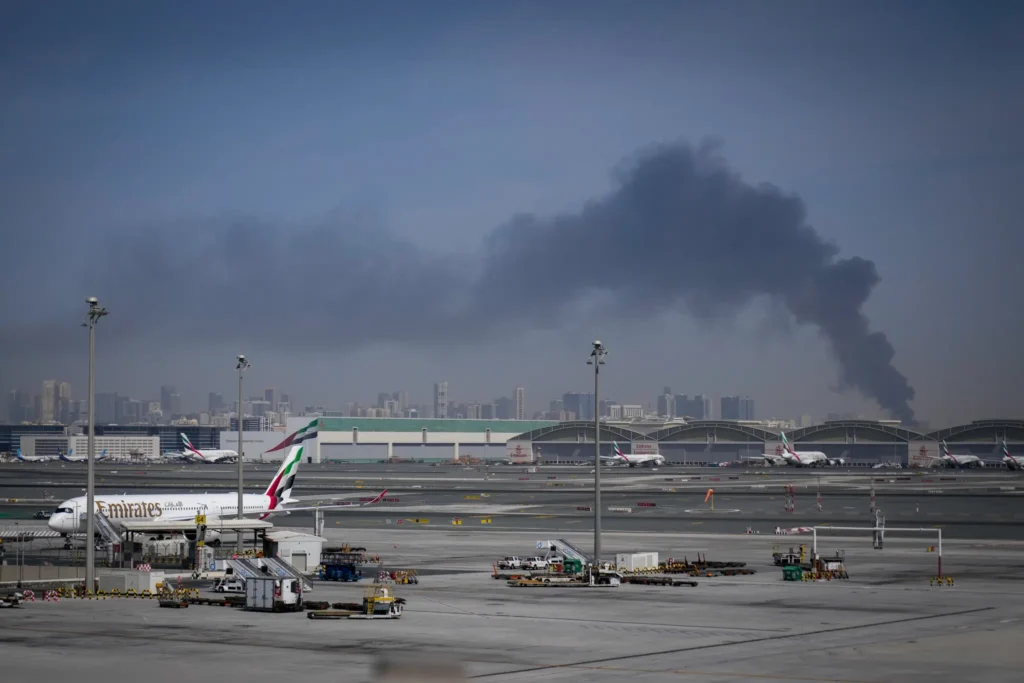
At the peak of the conflict, airlines were pushed into unfamiliar territory. With traditional routes unavailable, they had to reroute through longer southern paths, bringing Southeast Asia into sharper focus. Cities like Bangkok, Singapore, and Kuala Lumpur became more than destinations. They became solutions.
For Thailand, this was a rare moment of exposure at scale. Transit passengers who would normally never pass through Bangkok suddenly found themselves connecting through the city, experiencing its airport, its efficiency, and in many cases, extending their stays.
And that kind of exposure matters.
Because in aviation, once a route is tested and proven viable, it doesn’t simply disappear. Airlines build optionality into their networks. They diversify risk. They keep alternatives alive.
Suvarnabhumi’s Quiet Upgrade to Global Relevance
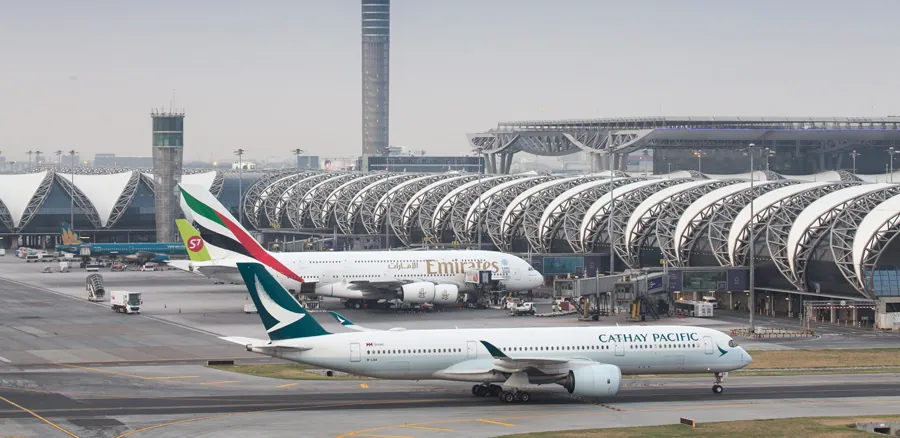
Suvarnabhumi Airport was already one of Southeast Asia’s busiest gateways, but this moment pushed it into a different category. It became part of a global contingency system.
Handling rerouted flights, absorbing transit passengers, and maintaining operational flow under pressure gave the airport something more valuable than traffic. It gained strategic credibility.
For travelers, especially long-haul passengers, familiarity is powerful. A smooth transit experience can influence future booking decisions. If Bangkok proved itself during a crisis, it increases the likelihood that airlines and passengers will continue to consider it, even when other options return.
The Long-Term Tourism Effect: From Transit to Destination
Here’s where it gets interesting for Thailand.
Transit is often the first step toward tourism. A passenger who connects through a city once is far more likely to return intentionally. Exposure creates curiosity. Convenience lowers psychological barriers.
During the rerouting period, Thailand effectively received a wave of “accidental visibility” among global travelers. Some extended their layovers. Some explored the city briefly. Others simply took note.
Over time, even a small conversion rate from transit passengers to future tourists can have a measurable impact. Especially for a destination like Bangkok, which already balances accessibility, affordability, and cultural appeal.
In other words, what started as a disruption could evolve into a pipeline.
A More Diversified Aviation Map
Even as Middle Eastern hubs regain dominance, airlines are unlikely to revert to a single-region dependency. The conflict exposed a vulnerability that the industry won’t ignore.
Southeast Asia now sits more firmly in the global aviation equation, not just as a destination region but as a viable transit layer. Bangkok’s role in that system may not replace Dubai or Doha, but it doesn’t need to.
It simply needs to exist as an option.
And in a world where resilience is becoming as important as efficiency, having options is everything.